



Nigeria’s push for inclusive digital transformation took a fresh boost as the International Telecommunication Union (ITU) and the National Information Technology Development Agency (NITDA) deepened engagement on shared priorities around skills, connectivity, and sustainable ICT growth.
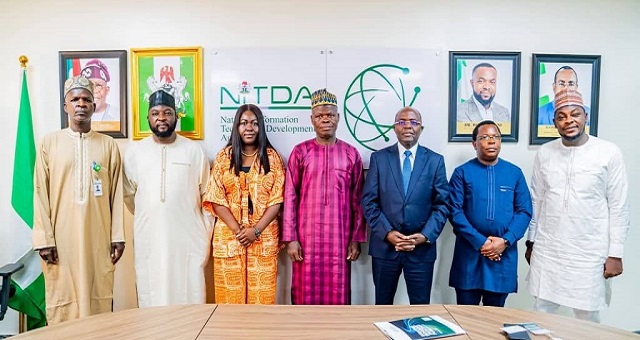
The Director of the ITU Telecommunication Development Bureau (ITU-BDT), Dr. Cosmas Luckyson Zavazava, led a high-level delegation on a courtesy visit to NITDA headquarters in Abuja, accompanied by the ITU Regional Director for Africa, Dr. Emmanuel Manasseh.
The visit reinforced ongoing cooperation between the global telecoms body and Nigeria’s lead ICT development agency.
Receiving the delegation on behalf of the Director General of NITDA, the Director of Corporate Planning and Strategy, Dr. Warowei Dimie, said the engagement provided an important platform for strategic dialogue on digital development challenges confronting Nigeria, Africa, and other developing regions.
Discussions centred on advancing inclusive and sustainable ICT growth, with a focus on practical solutions tailored to local realities.
Speaking on behalf of the NITDA Director General, Dr. Dimie reaffirmed the Agency’s commitment to strengthening collaboration with ITU, describing the organisation’s global experience as a critical resource for transferring tested solutions and international best practices to Nigeria.
He noted that digital skills and capacity building featured prominently in the talks, particularly as Nigeria works towards its ambitious target of achieving 70 per cent digital literacy nationwide by next year, with notable progress already recorded through partnerships with the private sector and other stakeholders.
The meeting also highlighted the adoption of Nigeria’s National Digital Literacy Framework as a major milestone, offering a structured and inclusive pathway for skills development across different segments of society.
Participants further drew attention to persistent connectivity gaps in rural and underserved communities, underscoring the need for targeted interventions such as grassroots digital training and the deployment of National Youth Service Corps members as digital literacy ambassadors.
In his remarks, Dr. Zavazava outlined ITU-BDT’s mandate to bridge the digital divide, promote inclusive ICT development, strengthen regulatory frameworks, and support member states in building resilient digital infrastructure. He noted that these priorities align closely with Nigeria’s digital transformation agenda.
He added that ITU operates across its 194 member states through regional and area offices, including its West Africa office in Dakar, Senegal, and the Africa regional office in Addis Ababa, Ethiopia.
According to him, Nigeria is already benefiting from ongoing collaboration with ITU in areas such as digital skills development, broadband infrastructure mapping, and cybersecurity.
Dr. Zavazava disclosed that Nigeria is among 11 sub-Saharan African countries participating in a €15 million ITU–European Commission project on broadband infrastructure mapping and modelling.
He also noted Nigeria’s participation in global cybersecurity drills organised by ITU in partnership with the United Arab Emirates, which attracted over 136 countries in the most recent edition.
The visit underscored the importance of sustained collaboration between international development institutions and national agencies, reaffirming the shared commitment of ITU and NITDA to leveraging ICTs as a catalyst for sustainable development, innovation, and inclusive socio-economic growth in Nigeria.
