



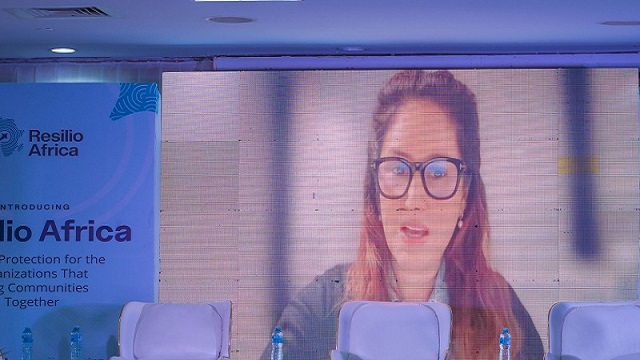
Google.org has reaffirmed its commitment to strengthening cybersecurity resilience across Sub-Saharan Africa with a grant supporting the launch of Resilio Africa, a new initiative by the Cybersafe Foundation aimed at protecting critical community institutions.
Delivering virtual remarks at the launch event in Lagos, Haviva Kohl, Senior Program Manager for Europe, the Middle East and Africa (EMEA) at Google, praised the Cybersafe Foundation team for its forward-looking approach to cybersecurity.
“At Google.org, we look for force multipliers, organizations that don’t just solve a problem for today, but build the infrastructure to protect tomorrow,” Kohl said. “Cybersecurity is exactly that.”
She commended the non-profit leaders and operators of critical community infrastructure in attendance, describing them as the backbone of their communities. Whether running health clinics, non-governmental organizations, or other essential services, she noted, these institutions provide the foundational services that keep society functioning.
Kohl highlighted the urgency of the initiative, citing the rapid pace of digital transformation across Sub-Saharan Africa. While digitization has expanded access and opportunity, she warned that it has also created new vulnerabilities.
“We are seeing more cybercriminals targeting the institutions we rely on,” she said, noting that Africa recorded a 23 per cent increase in ransomware attacks in 2023, with public and non-profit institutions among the most affected.
According to her, cyber incidents involving hospitals, municipal services or other public infrastructure are not merely technical disruptions but threats to physical safety and public trust.
“When a hospital’s data is held ransom or a municipal water board is breached, it isn’t just a tech problem, it’s a threat to the safety and trust of millions of citizens,” Kohl said.
She acknowledged that many community-serving organizations operate on limited budgets and rely on outdated systems, conditions that heighten their exposure to cyber threats. Resilio Africa, she explained, is designed to address that gap
Funded through a Google.org grant, the programme offers comprehensive and practical cybersecurity support tailored to organizations that lack the resources to maintain complex security operations.
Kohl emphasized that the initiative goes beyond theoretical training, incorporating threat intelligence support, tabletop simulations, and customized incident response playbooks to ensure institutions know how to act when faced with a cyber threat.
“This programme was built for you,” she told the NGOs and community leaders present. “At Google, we believe technology is a force for good, but for technology to be good, it must be safe.”
Kohl described Google’s commitment to Africa as long-term, adding that the grant represents an investment not only in technology but in the people and protocols necessary to safeguard the continent’s growing digital economy.
She urged eligible organizations to apply without delay, emphasizing the importance of proactive action.
“Let’s not wait until the next breach to act. Let us build resilience today,” she said.