



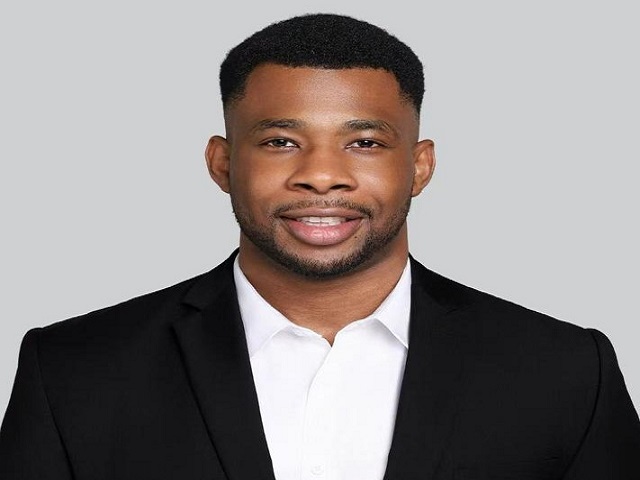
In the heart of Shenzhen, widely regarded as the world’s most powerful technology and manufacturing hub, a Nigerian technology expert is steadily reshaping perceptions about African excellence in advanced innovation.
Anambra State-born, Francis Okafor, a senior technology lead, artificial intelligence advocate, and global community organiser, has emerged as one of Africa’s most visible tech voices within China’s competitive innovation space. He stands at the intersection of cutting-edge innovation and African representation, proving that Nigerian excellence belongs at the very heart of the world’s most advanced technological ecosystems.
“I’m based in China, and I’ve been here for about eight years now,” Okafor says. “What I do full-time is tech, real, deep tech.”
A Strategic Role in a Global Technology Powerhouse
Okafor currently serves as a Tech Lead at IDEMIA, a multinational technology company and global leader in identity security, biometrics, cryptography, and secure financial systems, with expanding interests in quantum computing.
From China, he oversees DevOps coordination, software development, artificial intelligence systems, and robotics-enabled manufacturing tools across multiple global hubs, including China, India, France, Brazil, and the United States.
Despite his senior leadership position, Okafor remains hands-on. “Even though I’m a tech lead, I still write the core code,” he explains. “My work is about 70 per cent tech and 30 per cent managerial. I’m still a full-fledged tech guy.”
Challenging Stereotypes and Rewriting African Representation
Operating in China’s advanced technology sector has presented unique challenges, particularly for Africans. Okafor notes that prevailing stereotypes often confine Africans to entertainment or sports-related roles.
“In China, Africans are usually seen as being good at sports or music,” he says. “When you say you’re an engineer or working in AI, people don’t really associate that with Africans.”
Determined to counter this narrative, Okafor deliberately embedded himself in elite engineering and hacker communities dominated by CEOs, CTOs, top executives, researchers, and professors. There, his technical brilliance earned him respect, visibility, and influence, gradually challenging deeply ingrained assumptions.
“What pained me the most was that Africa had zero representation in these serious tech spaces,” he recalls. “Not Nigeria, but Africa.”
Today, Okafor is widely recognised as one of the most visible African voices in China’s AI and advanced technology space.
Driving China–Africa Technology Transfer
Beyond his corporate role, Okafor has emerged as a leading advocate for China–Africa technology transfer. Fluent in Chinese, French, and German languages, and deeply integrated into Chinese, European, and global tech communities, he operates as a cultural and technological translator between worlds.
He is the Chairman of the Shenzhen Afrotech Community, co-founder of the Shenzhen–Hong Kong Afrotech Network, and a core member of several influential platforms, including French Tech, German Tech Communities, and international AI business networks.
Through these platforms, he has organised and spoken at conferences, hackathons, and policy dialogues, ranging from delivering keynote alongside a minister in the Nigerian Embassy in Beijing to global sustainability summits, consistently advocating for Africa’s inclusion in the creation, not just consumption, of technology.
“China is many steps ahead in manufacturing, hardware, and AI,” he explains. “Africa has always been the last to receive innovation. We don’t have a say in development, and that’s the problem I wanted to address.”
Based in Shenzhen, he identified an opportunity to act as a bridge. “This is where Apple, IBM, everybody comes to manufacture,” he says. “So I asked myself, how do I use my position here to benefit Africa?”
From Behind-the-Scenes Engineer to Recognised Public Voice
Initially content working quietly within his company, Okafor’s increasing involvement in public technology discourse gradually drew attention from institutions and government bodies.
“I was just a nerd, indoors, coding, contributing to my company’s excellence,” he says. “But I realised I could also make impact outside my immediate domain.”
He has since been invited multiple times by Shenzhen authorities to speak on artificial intelligence and innovation, including a high-profile engagement that culminated in an invitation to attend the opening ceremony of the 2025 China National Games, an elite event typically reserved for top officials and distinguished contributors to national development.
“That event is not open to the public,” Okafor notes. “Only people selected by the government attend, and the President was there.”
What Nigeria Can Learn from China’s Technology Model
Reflecting on China’s technological rise, Okafor points to strong government commitment and deliberate localization as key drivers.
“The Chinese don’t just adopt technology,” he explains. “They take the idea, block it, improve it, and build their own.”
He cites examples ranging from operating systems to mapping services and artificial intelligence platforms, arguing that Nigeria must move beyond consumption to ownership.
“In Nigeria, we accept and consume,” he says. “Instead of copying and localising, we remain users.”
Artificial Intelligence, Ethics, and the Future of Work
As global concern grows over artificial intelligence and job displacement, Okafor believes the fears echo past technological transitions. “When the internet came, people were scared,” he recalls. “But new jobs emerged: web designers, content creators, digital assistants.”
He acknowledges that AI will displace some roles but insists it will also generate new opportunities. “If you don’t upskill, then yes, AI will replace you,” he says. “But if you use AI as an assistant, it will empower you.”
Okafor emphasizes upskilling, digital transformation, and mindset change, urging Africans to see AI as an assistant rather than a threat. At the same time, he advocates strong policy frameworks and detection technologies to manage risks such as AI-generated fraud and identity cloning.
A Message to Nigerians: Responsibility Begins with the Individual
While he recognises the role of government policy, Okafor insists individuals must take ownership of their future. “Don’t wait for the government,” he advises. “Every Nigerian has a responsibility to understand AI and apply it in their own field.”
From agriculture and education to journalism and healthcare, he believes artificial intelligence can be localised to solve real problems. “AI is beyond ChatGPT,” he says. “It’s computer vision, prediction, automation, and it can work even without the internet.”
Education, he insists, must be reoriented toward innovation, not recycled academic exercises.
Building a Sustainable China–Nigeria Innovation Bridge
Looking ahead, Okafor is determined to replicate aspects of his China-based work in Nigeria. Encouraged by Ambassador Nini Okey-Uche, a minister at the Nigerian Embassy, he has begun exploring ways to formally connect Nigerian and China-based tech ecosystems.
“She told me it wasn’t good that I was contributing so much in China and nothing back home,” he recalls. “That conversation changed my thinking.”
His goal is to build a bridge between Nigerian talent and China’s vast pool of engineers, researchers, and manufacturers. “I’m on ground here,” he says. “I see new technologies every day, and Africa needs access to that knowledge.”
A Global Technologist with Nigerian Roots
At its core, Francis Okafor’s story is one of identity, excellence, and responsibility. Proudly Nigerian, unapologetically African, and globally relevant, he represents a new generation of Africans shaping the future from the world’s most competitive spaces.
His journey sends a powerful message: Africa does not lack intelligence, it only needs platforms, confidence, and bold representation.
“I want to change the narrative,” he says simply. “Africans are not just entertainers. We are very good engineers too.”
And Francis Okafor is ensuring the world takes notice.