



News Highlights:
- NITDA urged Nigerian youths to transition from tech consumers to creators by developing home-grown AI solutions targeting critical sectors.
- Founder of VibeCode Africa emphasised problem-driven innovation, challenging participants to build AI solutions based on real-life community issues.
Young Nigerians have been urged to move beyond consuming technology and begin building practical, home-grown artificial intelligence solutions capable of tackling the country’s pressing socio-economic issues.
This call formed the central thrust of discussions at an Artificial Intelligence Hackathon organised by the National Information Technology Development Agency (NITDA) in partnership with VibeCode Africa in Abuja, where stakeholders emphasised the need to reposition Nigeria’s youthful population as active drivers of digital transformation.
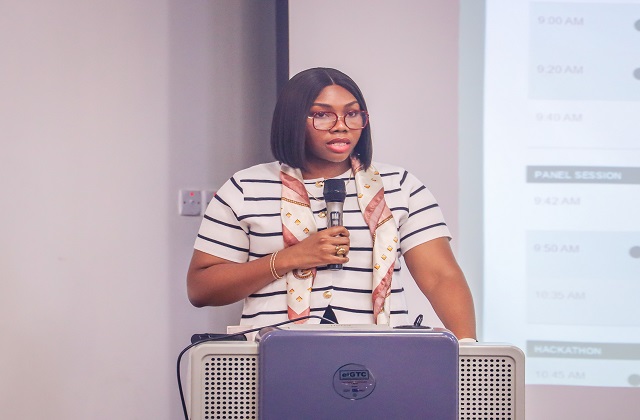
Delivering the keynote address, the Director General of NITDA, Kashifu Inuwa, represented by the Acting Director of Digital Literacy and Capacity Building, Dr. Ahmed Tambuwal, who spoke through Mrs. Udoka Mannie, underscored the strategic importance of youth participation in shaping the country’s technological future.
He described the hackathon as more than just a competition, noting that it offered a collaborative platform for participants from diverse backgrounds to co-create AI-driven solutions tailored to Nigeria’s realities.
According to Inuwa, Nigeria’s demographic advantage remains one of its greatest assets, with over 60 per cent of the population under the age of 25, placing the country in a strong position to benefit from emerging technologies.
“As you can see, this room is filled with young people; this represents a powerful opportunity for innovation and digital skills development,” he said.
He noted that artificial intelligence is already transforming economies, governance structures and societies globally, stressing that Nigeria must decide whether to shape the technology for national development or remain dependent on foreign innovations.
Inuwa reiterated that NITDA’s mandate is not only to regulate information technology but also to ensure it catalyses growth and innovation.
He added that the agency’s Digital Literacy and Capacity Building Department is focused on equipping Nigerians with the skills required to compete in the global digital economy, highlighting the Digital Literacy for All initiative (DL4ALL) as a flagship programme aligned with the Federal Government’s goal of achieving 95 per cent digital literacy by 2030.
“Beyond literacy, we are now moving into capability. It is one thing to use technology, but another thing entirely to build with it. Today, we are challenging you to build,” he said.
Shifting focus to impact, Inuwa urged participants to prioritise solutions that address real-world challenges rather than pursuing recognition alone.
He identified key sectors such as healthcare delivery in rural areas, public service inefficiencies, agriculture, education, financial inclusion and the spread of misinformation as critical areas where AI applications could deliver transformative outcomes.
The NITDA boss also emphasised the need for responsible innovation, calling attention to ethical considerations, data protection and inclusivity in AI development.
“As we explore AI, we must be mindful of ethics, data protection and inclusion. Building responsibly is just as important as building brilliantly,” he said.
He commended VibeCode Africa for the partnership, describing such collaborations as essential to scaling innovation, while encouraging participants to experiment, collaborate and learn rapidly.
“The future of AI in Nigeria will not be imported. It will be built by people like you in rooms like this,” he added.
Earlier in her opening remarks, the founder of VibeCode Africa, Lola Adey, challenged participants to rethink conventional approaches to innovation, urging them to develop solutions rooted in personal and community experiences.
She explained that, unlike previous editions, this year’s hackathon would not assign sectors such as agriculture or healthcare. Instead, participants were required to identify challenges within their immediate environments and design solutions accordingly.
“We’re not going to give you any industry. We want you to dig deep into yourselves. What are the problems you are facing? What are the problems your brothers and sisters are facing? What are the issues you notice when you walk around?” she said.
Adey pointed to persistent issues such as electricity shortages, insecurity and gaps in social services as areas ripe for technological intervention.
According to her, the initiative is designed not just to convene young innovators but to create pathways for entrepreneurship, employment and global opportunities.
“With artificial intelligence, you now have something in your hand that you can use to actually solve problems. You don’t have to wait for anybody anymore,” she said.
She further encouraged participants to remain focused, collaborative and open to learning, noting that the connections formed during the programme could lead to future partnerships, investments or career opportunities.
