



News Highlights:
- Ericsson appoints Per Narvinger as new CEO
- Leadership transition aligned with AI and connectivity growth
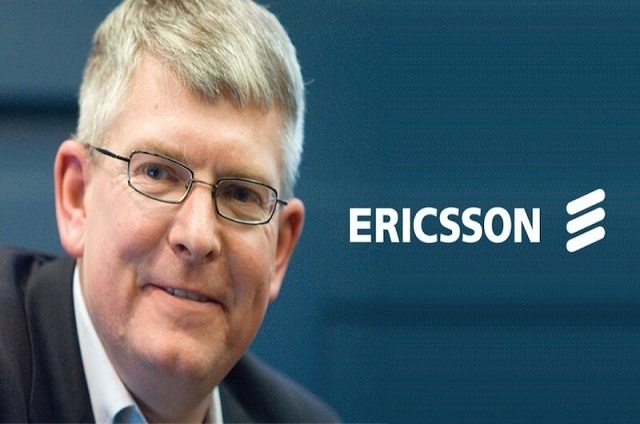
Swedish telecommunications giant Ericsson has announced a major leadership transition, appointing long-serving executive Per Narvinger as its next President and Chief Executive Officer, effective October 1, 2026, as current CEO Borje Ekholm prepares to step down after nearly a decade at the helm.
Narvinger, who currently leads Ericsson’s Business Area Networks, will take over leadership at a critical period for the telecoms industry as artificial intelligence increasingly drives demand for advanced connectivity infrastructure.
He succeeds Ekholm, who has guided the company since January 2017 and will remain with Ericsson as an executive adviser until June 15, 2027, to ensure a smooth transition.
Announcing the appointment, Ericsson Chairman Jan Carlson described Narvinger as a seasoned industry leader with extensive technical and commercial expertise.
He noted that Narvinger has consistently demonstrated strong leadership across several strategic business areas, making him well-positioned to lead the company’s next phase of growth.
Narvinger has spent his entire professional career at Ericsson, joining the company in 1997. Before assuming responsibility for the Networks division in March 2025, he led Ericsson’s Cloud Software and Services business, overseeing key initiatives in digital transformation and network modernization.
The leadership change comes as Ericsson seeks to strengthen its position at the intersection of telecommunications and artificial intelligence.
Narvinger said he was honoured to be entrusted with the role at what he described as a pivotal moment for the industry.
“As AI continues to industrialise, demand for advanced connectivity solutions will increase significantly, and that is an area where Ericsson is already leading,” he said, signalling his intention to deepen the company’s focus on next-generation network technologies and AI-enabled services.
Ekholm leaves office after steering Ericsson through a period of significant transformation. When he took charge in 2017, the company was undergoing extensive restructuring amid rapidly changing market conditions.
Under his leadership, Ericsson sharpened its focus on 5G infrastructure, strengthened its global competitiveness, and reinforced its position as one of the world’s leading providers of communications networks.
Reflecting on his tenure, Ekholm said the company had successfully reinvented itself over the past nine years, evolving into a global communications and technology leader.
He highlighted Ericsson’s role in reshaping how mobile networks are deployed, managed, and monetised, while positioning the company to play a central role in what he called the emerging “physical AI era.”
Carlson credited the outgoing CEO with challenging conventional thinking and laying the foundation for Ericsson’s long-term success, describing his tenure as one marked by strategic renewal and industry leadership.
With Narvinger now set to take the reins, Ericsson is betting on continuity, deep technical expertise, and an accelerated AI strategy to drive its next chapter of innovation and growth.
