



The Federal University of Environment and Technology (FUET), Ogoni, Rivers State, has moved to secure strategic support from the National Information Technology Development Agency (NITDA) to accelerate the development of its digital infrastructure, strengthen innovation capacity and equip students with globally competitive digital skills.
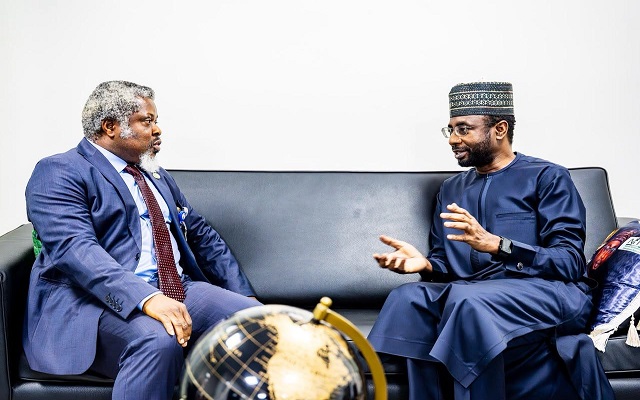
The proposed collaboration took centre stage during a courtesy visit by the University’s management, led by the Vice Chancellor, Professor Prince Chinedu Mmom, to NITDA’s Corporate Headquarters in Abuja, where both institutions explored areas of partnership aimed at creating a robust digital ecosystem to support teaching, research, innovation and talent development.
Receiving the delegation on behalf of the Director General of NITDA, Kashifu Inuwa, the Director of Digital Literacy and Capacity Building, Mr. Oladejo Olawunmi, reaffirmed the Agency’s commitment to supporting Nigeria’s tertiary institutions through strategic investments in digital infrastructure and human capital development.
He noted that NITDA has continued to drive digital transformation across higher education by establishing Information Technology Community Centres, IT Parks, Innovation Hubs and implementing digital literacy programmes designed to promote research, entrepreneurship and innovation.
According to him, these interventions are anchored in the National Digital Literacy Framework (NDLF), which is being implemented in collaboration with the Federal Ministry of Education and the National Universities Commission (NUC) to institutionalise digital skills across Nigeria’s education system and prepare graduates for the demands of the global digital economy.
Reassuring the University of the Agency’s support, Inuwa said NITDA would give careful consideration to the institution’s requests, emphasising that collaboration with academic institutions remains central to the Agency’s mandate of building an inclusive, innovation-driven digital economy.
“Our mandate is to develop and regulate Nigeria’s digital ecosystem by providing enabling infrastructure and building the digital capacity of Nigerians. Through our interventions in universities, including IT Parks, Innovation Hubs, and digital literacy initiatives, we are laying the foundation for a knowledge-driven economy. We will carefully review your requests and identify areas where the Agency can provide the necessary support,” he said.
He further stressed that NITDA would continue to deepen strategic partnerships that advance innovation, digital inclusion, research excellence and workforce development in line with the Renewed Hope Agenda of President Bola Ahmed Tinubu’s administration.
Earlier, Professor Mmom described FUET as a specialised institution established by President Bola Ahmed Tinubu to address the developmental aspirations of the Ogoni people while promoting excellence in environmental sustainability, science, technology and innovation.
Although the University is still in its formative years, he disclosed that it has completed its master plan, academic brief and academic structure, and has received approval to commence academic programmes across six faculties—Engineering and Technology, Environmental Sciences, Natural and Applied Sciences, Agriculture, Allied Health Sciences, and Management Sciences.
The Vice Chancellor, however, identified inadequate ICT infrastructure as one of the institution’s most pressing challenges, particularly for technology-focused programmes.
“We have established departments in Computer Science, Computer Engineering, Cyber Security and Information Technology, but we currently do not have the basic computing facilities needed to support these programmes. To prepare our students for the realities of today’s digital economy, we require computers, workstations, digital laboratories and reliable internet connectivity,” Professor Mmom said.
He appealed to NITDA to support the University with critical digital infrastructure and capacity-building initiatives that would enable it to deliver quality technology education, strengthen research and innovation, and produce graduates equipped with industry-relevant digital competencies.
The meeting ended on a positive note, with both institutions expressing confidence that the proposed partnership would accelerate digital education, expand research and innovation opportunities, and contribute to the Federal Government’s vision of building a resilient, inclusive and globally competitive digital economy through sustained investment in technology and human capital.
