



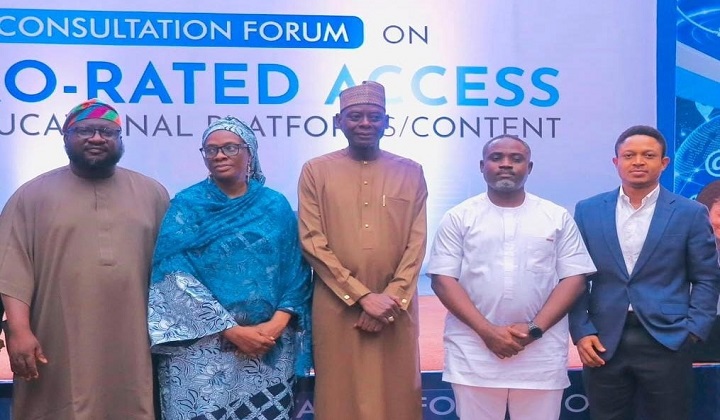
Stakeholders from across government, the telecommunications industry, development organisations and the private sector have thrown their weight behind the Nigerian Communications Commission’s (NCC) proposed framework for zero-rated access to educational platforms and digital learning content, describing it as a major step towards expanding educational opportunities, digital inclusion and equitable access to learning across Nigeria.
The broad endorsement came during the Commission’s first public consultation forum on the proposed framework, “Zero-Rated Access to Educational Platforms and Content in Nigeria,” held in Abuja on Tuesday, where participants agreed that removing data costs for educational content could significantly improve learning outcomes, particularly for students and underserved communities.
The stakeholders, drawn from the Federal Ministry of Communications, Innovation and Digital Economy, the Federal Ministry of Education, the United Nations Educational, Scientific and Cultural Organization (UNESCO), the Association of Licensed Telecommunications Operators of Nigeria (ALTON), the Nigerian Governors’ Forum (NGF), uLesson Group and other organisations, stressed that the success of the initiative would depend on sustained collaboration and continued investment in telecommunications infrastructure.
They emphasised the need for network operators and Internet Service Providers (ISPs) to strengthen network coverage and capacity, noting that reliable and affordable internet connectivity remains critical to the effective implementation and long-term sustainability of zero-rated educational services.
Opening the consultation, the Executive Vice Chairman and Chief Executive Officer of the NCC, Dr. Aminu Maida, disclosed that the Industry Committee established to develop the initiative had thoroughly examined its technical, policy, regulatory and commercial dimensions before producing a consultation paper to facilitate public engagement.
Represented by the Commission’s Director of Policy, Competition and Economic Analysis, Ayuba Shuaibu, Maida underscored the importance of broad stakeholder participation in shaping a framework that reflects industry realities while supporting Nigeria’s educational aspirations.
He explained that contributions from network operators, educational institutions, content providers, government agencies, development partners, civil society organisations, students, teachers, and the wider public were essential to developing a practical and sustainable framework.
According to him, such collaboration would ensure that the framework effectively balances educational objectives with regulatory efficiency, transparency, fairness and long-term sustainability.
Maida further noted that the consultation aligns with the Commission’s broader commitment to promoting digital inclusion by leveraging technology to improve access to quality education.
He explained that the engagement brought together key players from the communications, education, technology, and development sectors to deliberate on practical approaches for providing access to accredited educational platforms and content either at no data cost or through specially supported access arrangements.
The EVC said the initiative is specifically designed to eliminate digital and connectivity barriers to learning while widening access to educational resources for students and other learners nationwide.
“The initiative also forms part of the Commission’s broader efforts to leverage technology in advancing national educational objectives and promoting inclusive digital participation,” Maida said.
The consultation also enabled stakeholders to scrutinise the objectives of the Zero-Rated Access Initiative, assess the proposed implementation framework and provide technical, legal, regulatory, commercial and operational inputs to strengthen the policy.
Deliberations focused on implementation models, eligibility requirements for educational platforms and content, governance structures, consumer protection measures, operational guidelines, and the criteria for accrediting educational resources eligible for zero-rated access.
Participants also made recommendations aimed at enhancing the framework, ensuring effective implementation and guaranteeing its long-term sustainability.
The Commission stated that all submissions and recommendations received during the consultation would be carefully considered in refining the framework and developing a practical roadmap for implementation.
According to Maida, the initiative has the potential to make a significant contribution to Nigeria’s efforts to expand educational access, improve digital literacy, and harness technology as a catalyst for national socio-economic development.