



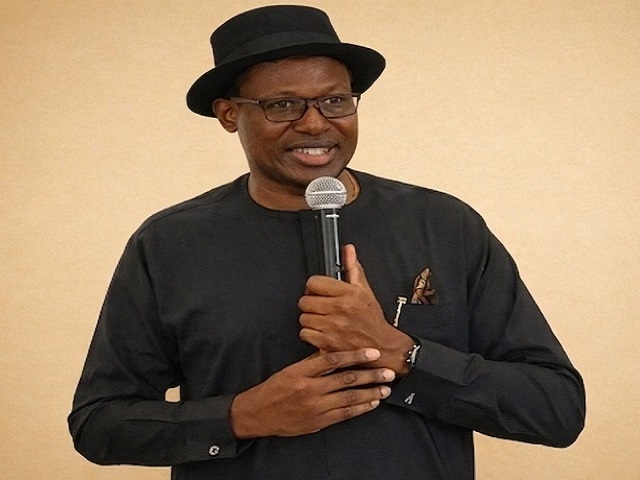
Nigerian telcos invested approximately ₦2.13 trillion in capital expenditure in 2025 and have earmarked an additional ₦1.86 trillion for network expansion, technology modernisation and improved quality of service in 2026, the Chairman of the Association of Licensed Telecommunications Operators of Nigeria (ALTON), Engr. Gbenga Adebayo, has disclosed.
Delivering a keynote address titled “Building Nigeria’s Digital Economy: Telecommunications as the Foundation for Investment, Innovation and Inclusive Growth” at the Lagos Chamber of Commerce and Industry (LCCI) ICTEL Expo 2026, Adebayo said the scale of investment underscores the industry’s unwavering commitment to building Nigeria’s digital future despite prevailing economic challenges.
He attributed the renewed investment momentum to the Federal Government’s strategic tariff adjustment approved in 2025, which, he said, restored financial sustainability across the telecommunications sector after a prolonged period of strain.
“The results are already evident,” he said, noting that the tariff adjustment enabled operators to move “from a period of severe financial pressure to one of renewed capital reinvestment and network expansion.”
Adebayo, however, stressed that sustaining such investments requires an enabling business environment, noting that ALTON has proposed closer collaboration among the Nigerian Communications Commission (NCC), the National Bureau of Statistics (NBS), and the Central Bank of Nigeria (CBN) to develop a more comprehensive framework for reporting on telecommunications investment.
“A transparent and accurate investment profile will better position Nigeria as a credible destination for telecommunications investment, strengthen investor confidence and support sound public policy,” he stated, adding that “investment follows confidence, and confidence is built on policy consistency, regulatory certainty, infrastructure protection and transparent market information.”
The ALTON Chairman said telecommunications has become the foundation upon which Nigeria’s economic transformation and future competitiveness will be built, arguing that the sector now serves as the backbone of productivity, innovation and investment across virtually every industry.
Addressing business leaders, policymakers and industry stakeholders at the Expo, he observed that banking, manufacturing, agriculture, healthcare, education, commerce and government services all increasingly depend on resilient digital infrastructure.
“Telecommunications has therefore evolved from being merely a communications service into one of the most critical enablers of national productivity, investment and economic resilience,” Adebayo said. “The future competitiveness of Nigeria will depend not simply on the quality of our roads and ports, but equally on the quality, reach and resilience of our digital infrastructure.”
He described Nigeria as one of Africa’s largest digital markets with enormous opportunities in artificial intelligence (AI), cloud computing, fintech, e-commerce, smart manufacturing and precision agriculture, insisting that these opportunities can only be realised through sustained investment in broadband infrastructure.
“Without resilient telecommunications networks, there can be no meaningful AI economy. Without fibre infrastructure, there can be no digital industrialisation. Without continuous investment in networks, there can be no sustainable digital transformation,” he said, describing telecommunications as “the economy’s digital backbone.”
Adebayo also welcomed the Federal Government’s designation of telecommunications infrastructure as Critical National Information Infrastructure (CNII), describing the policy as both timely and strategic.
According to him, disruptions to telecommunications infrastructure result in economic losses, lower productivity and diminished investor confidence, making infrastructure protection a shared responsibility.
“It requires a Whole-of-Society approach involving government, regulators, operators, businesses, local communities and law enforcement agencies. Infrastructure protection must become a shared national responsibility,” he said.
He said operators are equally committed to strengthening network resilience through continuous infrastructure investment, enhanced cybersecurity, international deployment standards and the deployment of artificial intelligence for predictive maintenance and network management.
“Resilience must be designed into our networks—not added afterwards,” he emphasised.
The ALTON Chairman also used the opportunity to dismiss allegations that telecommunications operators deliberately deplete customers’ data, describing such claims as unfounded and inconsistent with the industry’s regulatory and operational framework.
“Let me state unequivocally: telecommunications operators have absolutely no commercial incentive to steal customers’ data. Such a practice would be unlawful, unethical, commercially self-defeating, and subject to stringent regulatory oversight by the Nigerian Communications Commission (NCC),” he said.
He explained that modern smartphones consume data through several background activities—including cloud backups, software updates, AI services, application synchronisation, video streaming and location tracking—many of which users may not consciously initiate.
Rather than promoting misinformation, Adebayo urged consumers to improve their digital literacy by understanding how their devices consume data and making greater use of built-in data management tools.
“The digital economy cannot flourish where misinformation erodes trust. Let us therefore promote facts over speculation, evidence over perception, and partnership over suspicion,” he said, reaffirming the industry’s commitment to transparency, fairness and improved customer experience.
Looking ahead, Adebayo envisioned a Nigeria where affordable high-speed broadband powers businesses, schools, hospitals, manufacturers and entrepreneurs, insisting that the vision is achievable through sustained investment, policy stability and infrastructure protection.
Concluding his address, he stressed that telecommunications is no longer simply about connecting people but about connecting opportunities, industries, innovation and investment that will position Nigeria as Africa’s leading digital investment destination.
“The future of Nigeria’s economy will increasingly be measured by its digital competitiveness,” he said. “Together, government, industry and the business community can build the resilient digital infrastructure that will power the next phase of Nigeria’s economic transformation.”