



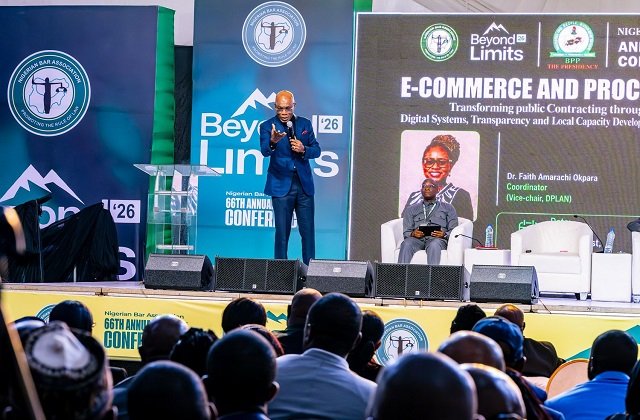
A staggering 57 per cent of technology equipment procured by Nigerian government agencies and corporate organisations may be refurbished products being passed off as new, according to Zinox Group founder, Leo Stan Ekeh.
Ekeh described the practice as a major procurement fraud capable of undermining value for money and exposing organisations to substandard technology, inadequate support and significant financial losses.
He called for tougher verification of technology purchases and appropriate sanctions for companies found to have supplied refurbished equipment as new.
The technology entrepreneur made the disclosure at the 66th Annual General Conference of the Nigerian Bar Association (NBA), warning that Nigeria’s growing dependence on foreign technology brands, coupled with weak adherence to authorised Original Equipment Manufacturer (OEM) partnership structures, could be creating an avenue for procurement abuse.
Speaking during a session titled “E-Commerce and Procurement: Transforming Public Contracting through Digital Systems, Transparency and Local Capacity Development,” Ekeh said the problem went beyond the preference for foreign brands.
It raised fundamental questions about how technology products are sourced, authenticated and certified before public institutions and large corporations commit funds to them.
He argued that organisations could spend heavily on products assumed to be new and genuine, only to discover that they are refurbished or otherwise not supplied through legitimate channels.
Such practices, he said, undermine confidence in the procurement system and disadvantage indigenous technology companies with the capacity to provide quality products and services.
Ekeh therefore urged stronger implementation of the Nigeria First Policy, arguing that competent Nigerian technology companies should receive fair consideration in public procurement, provided they meet the required technical, quality and certification standards.
He stressed that local preference should not mean compromising quality. Rather, procurement decisions should be driven by authenticity, competence, certification, performance and value for money.
With more than four decades of experience working with global technology giants, including HP, IBM, Dell, Cisco and Microsoft, Ekeh said Nigeria had sufficient indigenous capacity to participate meaningfully in the technology value chain.
Through Zinox Technologies, he pioneered what he described as Nigeria’s first internationally certified computer manufacturing facility and was involved in major technology deployments, including the country’s digital voter registration exercise and ICT infrastructure projects across Africa.
He also called for technology to be deployed more aggressively to police the procurement process itself.
According to him, e-procurement platforms, government cloud infrastructure, digital audit trails and robust data protection systems can make public contracting more transparent and traceable, while reducing opportunities for manipulation and procurement fraud.
Ekeh maintained that technological independence should form part of Nigeria’s broader national development strategy, arguing that no country can achieve meaningful independence without the capacity to develop, deploy and maintain critical technologies.
The discussion also highlighted the changing demands on the legal profession as procurement becomes increasingly digital. Ekeh urged lawyers to develop stronger digital competence to enable them properly advise government agencies and businesses on technology contracts, regulatory compliance, data protection and emerging procurement risks.
The session was led by the Director-General of the Bureau of Public Procurement, Dr. Adebowale Adedokun. Other speakers included NITDA Director-General/CEO, Kashifu Inuwa Abdullahi; Director-General of the Lagos State Public Procurement Agency, Fatai Idowu Onafowote; Director-General of the Kaduna State Public Procurement Authority, Engr. Sanusi Aminu Yero; and Andrew Osemedua Odom, SAN.
Dr. Faith Amarachi Okpara coordinated the session.
The controversy over refurbished technology being sold as new places renewed focus on the need for stronger procurement verification mechanisms, particularly as government spending on digital infrastructure continues to grow.
For Nigeria’s technology sector, the challenge is twofold: protecting public and corporate buyers from fraudulent practices while creating a procurement environment in which credible indigenous technology companies can compete on quality, innovation and value—not merely on the origin of their products.