



Nigeria is opening a new front in its drive to attract technology investment, with the Federal Government positioning its sovereign cloud strategy as a catalyst for private capital, local data centres and a broader digital infrastructure boom.
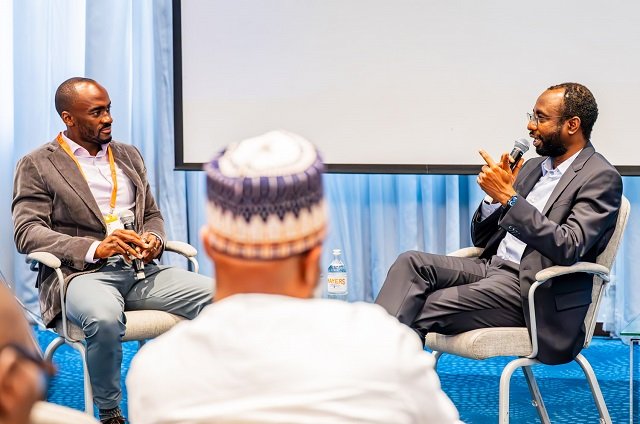
Director-General of the National Information Technology Development Agency (NITDA), Kashifu Inuwa Abdullahi, disclosed this during a fireside chat, “From Policy to Investable Demand,” moderated by Jay Katatumba, Senior Investment Director, Africa50 Infrastructure Acceleration, at the Nigerian Workshop on Nigeria’s Digital Infrastructure Opportunity during ITW Data Cloud Africa 2026 in Nairobi, Kenya.
Inuwa told data centre operators, hyperscalers, infrastructure providers, investors, financial institutions, cloud providers, and subsea cable and fibre companies that Nigeria was shifting from being primarily a regulator to becoming an active enabler of digital investment.
He said the National Cloud Infrastructure Strategy was designed to bridge public policy and private capital by converting regulatory requirements into predictable demand capable of supporting long-term investment.
According to him, a thriving digital ecosystem requires five interconnected pillars: higher institutions to develop human capital, entrepreneurs to commercialise innovations, corporate organisations to absorb talent and solutions, risk capital to de-risk market expansion, and government to provide a stable enabling environment.
He added that NITDA’s regulatory interventions were targeted at creating markets, catalysing local innovation and strengthening consumer protection.
Turning Policy into Business
Responding to concerns over how investors could translate policy alignment into actual revenue opportunities, Inuwa cited the Central Bank of Nigeria’s directive requiring domestic processing of financial transactions as an example of government policy creating demand for local digital infrastructure.
He said the National Digital Cloud Policy and its accompanying investment roadmap were similarly designed to reduce investment risks, provide clearer entry pathways, encourage the development of local data centres and expand the digital talent pipeline.
On concerns about power supply and the pressure increased digital processing could put on the national grid, the NITDA boss said operators would not be required to rely solely on grid electricity.
He explained that regulatory frameworks permit data centre operators to develop captive power through renewable energy, gas-fired plants or Independent Power Purchase Agreements.
Inuwa also advocated hybrid cloud architectures to ensure business continuity during compliance periods, allowing organisations to use public cloud capacity while keeping sensitive information in locally hosted facilities.
He stressed that localisation requirements principally target sovereign data, including national financial records, health information and intelligence operations, because of their direct implications for economic and citizen security.
He warned that allowing sensitive financial and health data to remain outside national jurisdiction without adequate oversight could create geopolitical vulnerabilities and expose economies to manipulation.
Connectivity, Cloud and AI
Inuwa said the investment opportunity extends across the digital value chain, noting that connectivity, cloud computing and artificial intelligence are increasingly interconnected.
He pointed to Project Link as part of the government’s effort to expand broadband nationwide, while the National Sovereign Cloud Initiative would provide the computing capacity needed to support local AI workloads.
Building sovereign AI capability, he said, was critical as automated decision-making increasingly affects financial creditworthiness, healthcare allocation and judicial systems.
Inuwa noted that Nigeria’s efforts were gaining international recognition, with recent benchmarks ranking the country 38th globally in AI governance and policy, and the International Monetary Fund identifying Nigeria as a leader in Africa’s emerging AI economy.
He urged investors to take advantage of the emerging opportunities, stressing that Nigeria was ready to partner with private capital to build secure, scalable digital infrastructure for the country and the wider African market.
