



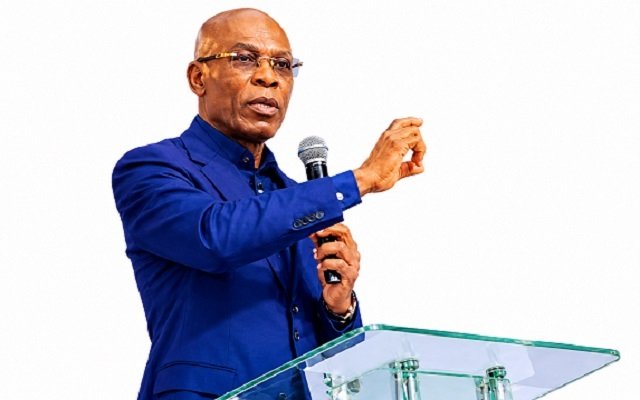
Chairman of Zinox Group, Leo Stan Ekeh, has urged African entrepreneurs and technology professionals to embrace artificial intelligence without sacrificing independent thinking, sound judgement and common sense, warning that excessive reliance on the technology could undermine the continent’s capacity to innovate and develop homegrown solutions.
Ekeh, who recently returned from a visit to SpaceX’s main Intelligence Station in Seattle, Washington, launched by Elon Musk, made the call during an interaction with young entrepreneurs and IT professionals.
The visit, undertaken at the invitation of SpaceX, included his wife, Mrs Chioma Ekeh, Chief Executive Officer of TD Africa Distributions, the authorised distributor of Starlink in West Africa.
Speaking on Africa’s technological future, the Zinox chairman declared that the continent had just two years to make a defining choice between remaining dependent on foreign technology and deliberately positioning itself as a global technology leader, stressing that technological independence had become a matter of survival.
Drawing on his decades of experience building technology businesses, Ekeh challenged the younger generation to move beyond consuming imported technologies and develop the ambition, expertise and capacity to influence the direction of the global digital economy.
His central message was that artificial intelligence, despite its enormous potential, must remain a tool under human control rather than become a substitute for human intelligence and reasoning.
He cautioned that while AI could research, analyse information, generate content and recommend solutions, its outputs must always be subjected to human scrutiny. According to him, recommendations that appear technically sound may not necessarily reflect the cultural, social, economic and political realities of African societies.
Ekeh observed that Africans possess a distinctive understanding of their environment, shaped by lived experiences that are not always adequately represented in the data, assumptions and frameworks informing artificial intelligence systems.
He warned that excessive dependence on AI could create a generation proficient in issuing instructions to machines but increasingly deficient in independent reasoning and practical decision-making.
He therefore advocated an approach to AI education that goes beyond teaching people how to operate the technology to equipping them with the ability to interrogate its outputs, verify information, identify inaccuracies and understand its limitations.
Clarifying his position, Ekeh said his argument was not against artificial intelligence but for its responsible adoption, anchored on confidence, curiosity and critical thinking. He maintained that the real opportunity lay in deploying AI to expand human capabilities while developing the intelligence, skills and infrastructure necessary for Africa to participate meaningfully in the global technology economy.
He described this philosophy as “Digital Holy Science”.
Africa must move beyond technology consumption
Reflecting on Africa’s technological journey, Ekeh expressed confidence in the continent’s human potential, citing the global achievements of entrepreneurs of African origin and describing Elon Musk, one of the world’s most influential technology entrepreneurs, as a “one-man superpower”.
He said such accomplishments should inspire Africans to recognise their capacity to innovate, build globally competitive businesses and contribute to shaping the future of technology.
Ekeh also reflected on his own contributions to moving Nigeria and Africa beyond the position of technology consumers, highlighting the businesses he had established and nurtured across different segments of the technology value chain.
Task Systems, founded in 1987, introduced desktop publishing and computer graphics to Nigeria, transforming production processes in the media and publishing industries.
In 1996, he established Stanoil in partnership with the then Elf Oil, pioneering the deployment of digital dispensing pumps at petrol stations.
His subsequent establishment of Zinox Technologies Limited in 2001 led to the development of Sub-Saharan Africa’s first internationally certified computer brands, with certifications from global technology giants Intel and Microsoft.
Through TD Africa, Ekeh built a major technology and lifestyle distribution business that has connected more than 18 Fortune 100 and Fortune 500 companies, alongside other international technology brands, with African markets.
The strategic acquisition of Konga in 2018 further expanded the group’s interests into e-commerce and omnichannel retail, among other sectors.
Taken together, these ventures reflect a broader entrepreneurial vision centred on building indigenous capacity, developing technology-driven businesses and strengthening Africa’s participation in the digital economy.
Ekeh acknowledged, however, that the journey towards technological independence had not been without challenges. His earlier efforts to establish stronger indigenous technology infrastructure, including data centre capabilities more than two decades ago, encountered significant obstacles and financial losses.
He said those experiences underscored the enormous investments, technical expertise, reliable electricity and supportive government policies required to build and sustain competitive technology infrastructure in Africa.
He also acknowledged the contributions of other Nigerian entrepreneurs, engineers and technology professionals whose initiatives continue to expand the continent’s digital capabilities, noting that their achievements demonstrate Africa’s potential to develop and adapt solutions rather than depend exclusively on technologies created elsewhere.
Why Africa needs its own technology infrastructure
The discussion also highlighted the strategic risks of excessive dependence on foreign technology platforms and infrastructure.
The global disruption that recently affected Microsoft 365 services, including Outlook, Teams and Copilot, provided an illustration of how technical failures within a major technology ecosystem could disrupt businesses, government operations and other institutions across different regions.
For Ekeh, such incidents reinforce the importance of developing African technology solutions and infrastructure capable of supporting the continent’s strategic and economic interests.
He argued that Africa needs technology systems designed around its unique markets, languages, infrastructure limitations, regulatory environments and business realities.
Developing homegrown technology, he stressed, does not mean shutting out international partnerships or rejecting global innovations. Rather, it involves building the technical competence and institutional capacity to develop, maintain and control essential systems while retaining the flexibility to collaborate with international technology providers.
Government must provide the foundation
Ekeh also underscored the critical role of government in creating an enabling environment for indigenous technology development and innovation.
He maintained that beyond policy declarations, governments must provide the fundamental infrastructure and economic conditions necessary for technology businesses to thrive.
These include reliable electricity, affordable broadband connectivity, digital infrastructure, research funding, technology-oriented education and transparent procurement processes that create opportunities for credible indigenous innovators.
He further called for policies that encourage local manufacturing, research and development, enterprise growth and the adoption of homegrown technology solutions.
According to him, without deliberate government support and the necessary infrastructure, promising entrepreneurs may struggle to scale their innovations, leaving public and private institutions heavily dependent on foreign technology systems.
Africa’s AI future: Consumer or contributor?
As artificial intelligence continues to transform industries, economies and the future of work, Ekeh’s intervention highlights a fundamental question facing Africa: whether the continent will remain predominantly a market for technologies developed elsewhere or invest in the capabilities required to become a significant contributor to the global technology revolution.
Africa possesses considerable human capital, an expanding technology ecosystem and a range of unique developmental challenges that require innovative solutions. These realities, he suggested, present enormous opportunities for entrepreneurs to develop applications, platforms and systems that address local needs while competing in international markets.
However, meaningful participation in the AI revolution must extend beyond adopting readily available platforms. The continent needs researchers, software developers, data scientists, infrastructure providers and technology entrepreneurs capable of building, adapting and improving the systems that will shape the future.
For Ekeh, the next generation must combine technological competence with sound judgement, creativity, critical thinking and an entrepreneurial mindset.
While artificial intelligence can accelerate innovation, improve productivity and expand possibilities, he maintained that it cannot replace the human responsibility to think independently, make informed decisions and understand the societies technology is designed to serve.
His message to young Africans was ultimately a call to ambition and self-belief: embrace artificial intelligence, but never surrender common sense; learn from global technological advancements, but develop solutions that address Africa’s realities; and, above all, reject the limitations of being technology consumers when the continent has the human capacity to become a creator, innovator and influential contributor to the global digital future.