




The Managing Director of the Anambra State ICT Agency, Chukwuemeka Fred Agbata (CFA), has offered a compelling insight into how Governor Chukwuma Charles Soludo, CFR, is repositioning Anambra through technology-led governance.
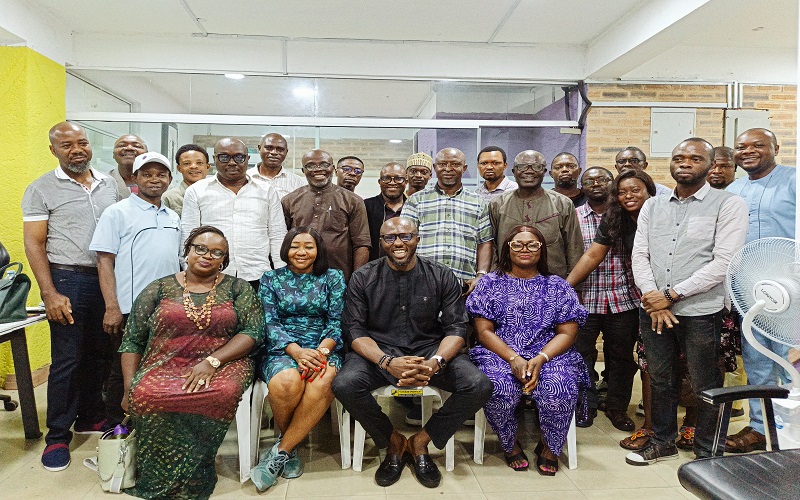
Agbata, who spoke during an interactive session with media executives in Lagos, explained that the Soludo administration is building a government that thinks, plans, and responds with digital intelligence, one where data, innovation, and citizen-focused tools redefine public service delivery.
“Governor Soludo’s vision is clear,” he said. “A smarter, faster, more efficient government driven by data, innovation, and citizen-focused digital tools.”
Agbata emphasized that the state has fully embraced advanced data analytics to enhance planning and decision-making, noting that AI-driven tools now help government agencies understand citizen needs in real time, guide interventions, and monitor impact more effectively.
He stated that while structured data proved powerful during earlier political engagements, the real objective is much broader.
“Our aim is not short-term deployment of data tools. We want to institutionalise a data culture across government,” he said. “We sit on rich datasets, from demographic insights to service requests, and we are using them to build a more responsive state.”
Part of this evolution, Agbata said, includes the development of conversational AI platforms that allow citizens to interact with government seamlessly, including in indigenous languages.
“Whether literate or illiterate, people should soon be able to speak to AI in a local language and have their requests processed. That’s the future of governance, and Anambra intends to lead.”
Agbata identified broadband expansion as one of the administration’s strongest pillars, describing it as the foundation upon which every other digital ambition rests.
He credited Governor Soludo’s progressive Right-of-Way policies and deliberate engagement with industry players for attracting massive fibre deployment across communities.
“When ISPs begin travelling to Anambra on their own, it’s a clear sign that they see good policy and a viable market,” he said.
The impact is already visible: more households in semi-urban communities now enjoy reliable fibre connections, an achievement Agbata said was “almost unthinkable” just a few years ago.
To further deepen digital access, the state is working toward establishing an Internet Exchange Point (IXP) to localise traffic, reduce cost, and improve speed.
“Localising traffic means your data no longer needs to travel to Lagos or Amsterdam before returning,” he explained. Although the project has faced technical delays, major progress is expected in 2026.
The ICT Agency boss highlighted national rankings that place Anambra as number one in the Southeast for ease of doing business and transparency. He attributed these milestones to measurable reforms championed by Governor Soludo.
Agbata also praised the young professionals powering the state’s digital ecosystem, especially those handling data analytics, GIS mapping, and digital infrastructure.
“Relationships matter,” he added, referencing how collaboration with telecom and technology executives has fast-tracked key infrastructure upgrades. “If we fully deploy just a fraction of the relationships we have within and outside the country, Anambra would be on a completely different level.”
He expressed appreciation to the Lagos media community for amplifying the state’s digital progress.
“We don’t take your support for granted. You have helped ensure that Anambra’s digital transformation is visible and appreciated.”
As Anambra expands investments in broadband, AI systems, and data-driven governance, Agbata said the state is steadily positioning itself as the Southeast’s emerging technology and innovation hub.
“There is a generation coming that is digital-first,” he said. “Our responsibility is to build systems ready for them.”
