



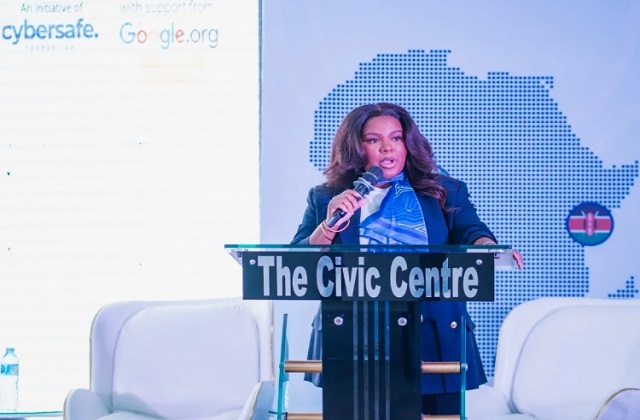
The Cybersafe Foundation has officially launched Resilio Africa, a multi-country initiative aimed at strengthening cybersecurity resilience among critical community institutions across Nigeria, Kenya, Ghana and South Africa.
Speaking at the event in Lagos, Executive Director of the Cybersafe Foundation, Confidence Staveley, noted that while many organizations recognize the risks posed by cyber threats, conversations often stall when it comes to implementation.
According to her, the primary barrier is not a lack of willingness but limited financial capacity to fund adequate cybersecurity measures.
“The conversation drops off at the point of taking action,” she said, explaining that many institutions lack the budgets required to implement robust security systems.
She disclosed that the programme’s provision of 10,000 hours of expert cybersecurity consultation—offered at no cost to participating institutions—would ordinarily represent services valued at over one million dollars. The support, funded through a grant from Google.org, will be delivered by specialists across four participating countries.
Staveley reaffirmed that the Cybersafe Foundation remains a non-profit organization focused on supporting vulnerable communities and institutions, and described Resilio Africa as a strategic intervention aimed at strengthening digital trust across the continent, ensuring that commerce and essential public services can operate securely in an increasingly digital society.
Although the programme currently covers Nigeria, Kenya, Ghana and South Africa, Staveley acknowledged that the cybersecurity challenges extend far beyond those countries, and expressed hope that demonstrated impact from the initial phase would attract additional funding to scale the initiative to more than the 200 critical community institutions currently targeted, including underserved Francophone nations.
“This work is free to the organizations we serve, but it is not free to deliver,” she noted, underscoring the need for sustainable funding.
Explaining her personal motivation, Staveley said she views Africa’s cybersecurity challenges as opportunities for impact. Despite her engagements on global platforms, she emphasized her commitment to Nigeria and the broader African continent, describing the region as both home and a priority.
She pointed to a growing mismatch between rising cyber threats and limited investment in cybersecurity infrastructure, arguing that bridging this gap is central to the Foundation’s mission.
Staveley also clarified that Resilio Africa will not collect or own user data from participating institutions. Instead, the programme will focus on strengthening internal controls, building capacity and guiding organizations toward improved data protection practices.
With Resilio Africa now underway, the Cybersafe Foundation aims to demonstrate how targeted support for critical community institutions can enhance digital security and build long-term resilience across Africa’s rapidly expanding digital economy.
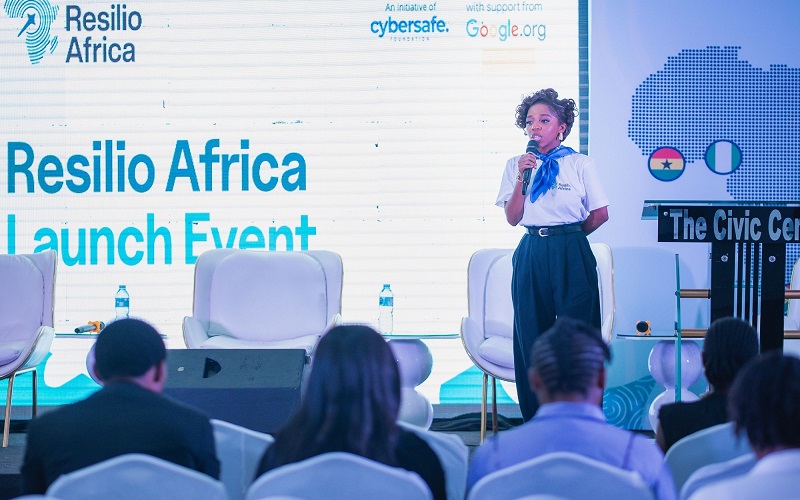
Earlier in her presentation, Success Tawo, Programs Lead at Cybersafe Foundation, described the project as a collaborative effort designed to equip essential service providers with the tools, skills and networks needed to defend against growing cyber threats.
“Resilio Africa is not about building an island by ourselves; it’s about building together,” Tawo said. “The goal is not to create panic around cyber incidents, but to recognize the opportunity to strengthen our systems and protect the communities we serve.”
Addressing a Growing Threat Landscape
Citing recent data highlighting billions of dollars lost to cybercrime in parts of Africa, Tawo emphasized that many institutions, particularly in the non-profit and community sectors, lack the technical capacity, budget and personnel to effectively manage cybersecurity risks.
“Limited technical staff, budget constraints and lack of in-house expertise are common challenges,” she noted. “This project is designed specifically for organizations that want to improve their cybersecurity posture but do not have access to the necessary support.”
Resilio Africa will focus on what it describes as Critical Community Institutions (CCIs)—organizations delivering essential services such as hospitals, schools, media organizations, helplines for gender-based violence, community-based groups, and other entities that handle sensitive personal data and serve vulnerable populations.
To qualify, organizations must be formally registered and operating in Nigeria, Kenya, Ghana or South Africa. Purely commercial enterprises, financial institutions, and policing bodies are excluded, as they are considered to already have access to specialized cybersecurity resources.
Target: 200 Institutions, 2 Million Records
The initiative aims to support 200 organizations across the four countries, with operations beginning in Nigeria and Kenya in the first year before expanding to Ghana and South Africa.
The programme’s broader ambition is to help protect at least two million records belonging to individuals across participating institutions. By strengthening multiple organizations rather than a single entity, the Foundation hopes to create a ripple effect of resilience across communities.
Participants will also join a regional cyber defense network, giving them access to peer organizations facing similar challenges and enabling structured knowledge-sharing across borders.
Comprehensive, Hands-On Support
According to Tawo, the programme will provide a structured and practical cybersecurity support package at no cost to participating organizations, thanks to funding from Google.org.
The support will begin with comprehensive security health checks, including risk profiling and organizational assessments to determine each institution’s current exposure to cyber threats. Based on the findings, participants will receive tailored six- to 12-month improvement plans designed to strengthen their systems progressively and sustainably.
To reinforce preparedness, the initiative will conduct phishing simulations and tabletop exercises, enabling organizations to test their ability to detect and respond to cyberattacks in realistic scenarios. Capacity-building sessions will also be organized for leadership, technical teams and general staff to ensure that cybersecurity awareness and best practices are embedded across all levels of each institution.
In addition, the programme will assist institutions in developing customized incident response playbooks, outlining clear, step-by-step procedures for handling cyber incidents and minimizing damage. Participating organizations will also gain access to real-time threat intelligence feeds through a centralized monitoring portal that provides alerts, sector-specific insights and regulatory updates.
Furthermore, the Foundation will provide over 10,000 hours of expert consultation, offering direct access to trained and certified cybersecurity professionals who can guide institutions through implementation and ongoing risk management.
“We are not pursuing perfection; we are pursuing risk reduction, stronger systems and long-term resilience,” Tawo explained. “Cybersecurity is not one-size-fits-all. Each institution will receive support aligned with its size, technical maturity and available resources.”
The programme also emphasizes sustainability, ensuring that improvements remain in place beyond the project timeline.
Building a Continental Network
A key feature of Resilio Africa is the establishment of a multi-country cyber defense coalition, enabling organizations to share threat intelligence and regulatory updates in real time.
“If an attack works in one organization, it’s likely to be attempted elsewhere,” Tawo said. “By sharing information quickly, we can prevent others from becoming victims.”
The centralized portal will provide national and international cybersecurity updates, sector-specific insights and alerts on regulatory changes affecting data protection and compliance.
Call for Applications
Tawo urged eligible organizations to apply immediately, noting that spaces are limited. Applications are open through the Resilio Africa website, and institutions must designate a responsive focal person to coordinate with the programme team.
“We cannot do this in isolation,” she said. “If your organization is safe but your neighbour is not, are we truly safe? The goal is to ensure no community institution is left vulnerable.”
With the official launch in Lagos marking the start of its first operational phase, Resilio Africa seeks to lay the foundation for a digitally resilient Africa, beginning with the institutions that serve its most vulnerable populations.