




News Highlights:
- Okafor secured second place at the 2026 OpenClaw Hackathon organized by Tencent in Shenzhen, outperforming many elite engineers in one of the world’s most competitive innovation ecosystems
- The competition coincided with Tencent’s rollout of the OpenClaw AI agent plugin on WeChat, instantly extending advanced AI capabilities to over a billion users.
In a striking moment of global recognition for African talent in artificial intelligence, Shenzhen-based Nigerian technologist Francis Okafor has emerged as the second-place winner at the 2026 Tencent OpenClaw Hackathon, a fiercely contested competition hosted by Chinese tech giant Tencent.
The achievement places the Nigerian engineer among the top innovators in one of the world’s most competitive technology hubs, Shenzhen, often described as China’s Silicon Valley.
Okafor’s journey to the podium was anything but scripted. Walking into Tencent’s facility on the day of the contest, he found a room already buzzing with elite programmers deep in preparation.
“Laptops open. Heads down. Some people setting up their system before the challenges even dropped,” he recalled, contrasting the scene with his own uncertainty at that moment. “And then there is me — a Nigerian looking around like, okay, Francis, what exactly are you doing here?”
Rather than confidence, his first reaction was raw nerves. “I won’t lie, I had goose bumps. Not the inspirational kind,” he admitted, describing a quiet internal debate about whether he had wandered into territory far beyond his league. Yet that hesitation quickly gave way to experimentation, a hallmark of the hackathon spirit.

Earlier that same week, Tencent had rolled out OpenClaw integration into WeChat (known domestically as Weixin), exposing its massive user base to AI agent capabilities.
Okafor, a senior technology lead, artificial intelligence advocate, and global community organiser, had already been stress-testing the system and decided, on the spot, to build his entry around it. “I had been pushing it hard all week just to see what it could do… so when the challenges dropped I thought, you know what, let me use this thing as my weapon.”
That decision proved decisive. Competing against some of the most accomplished engineers in China’s hyper-competitive tech ecosystem, Okafor’s solution stood out for both ingenuity and execution. “It went far enough, apparently,” he said with understated pride after securing second place.
Remarkably, he had entered without a grand plan. “I didn’t go in with a strategy. I went in for the thrill of it… Honestly, I thought I would learn a few things and go home with a good story.” Instead, he left with a trophy and a narrative that has resonated far beyond the competition hall.
Beyond personal triumph, Okafor emphasized the broader technological significance of the moment. Tencent released the WeChat OpenClaw plugin on the very morning of the event, effectively putting advanced AI agent tools into the hands of an estimated 1.4 billion users.
In his view, this signals a profound shift in how artificial intelligence will reach the public. The company, he observed, is “not just making AI accessible to developers… they are bridging it to everyone,” while using hackathons to identify innovators capable of pushing the technology forward, regardless of origin.
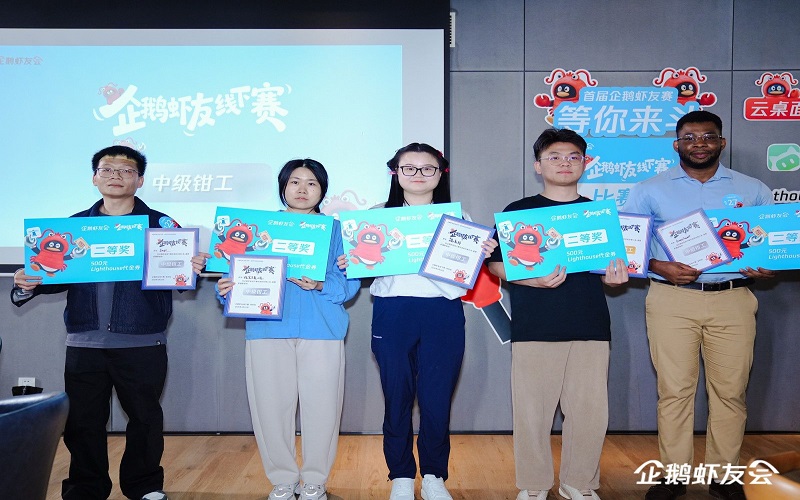
Okafor was acutely aware of his uniqueness in the room. “I was definitely the only African there and for sure stood out,” he noted. Yet what mattered was not nationality but capability. “Nobody cared about where I was from. They cared about what I built.”
His message to aspiring technologists, particularly those from underrepresented regions, is both simple and powerful: show up. “Enter things you think you have no business entering,” he urged. “The worst case is you learn something. The best case is you shock yourself.”
In an industry often defined by geography, capital, and institutional advantage, Okafor’s victory offers a compelling counter-narrative. Talent, preparation, and courage can still disrupt expectations, even in rooms that seem designed for someone else.
As he concluded in a line that has since captured widespread attention: Black excellence, he said, “doesn’t need a geography.”