



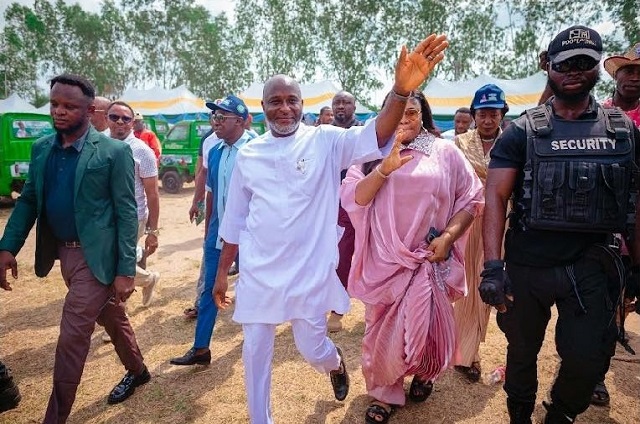
When the story of grassroots-focused leadership in the 10th National Assembly is written, the name Hon. Amobi Godwin Ogah will not simply appear as one more representative from Abia State. It will stand boldly as the embodiment of a new era, one defined by transformational representation, uncompromising service delivery, and record-setting empowerment initiatives that have altered the socio-economic trajectory of Isuikwuato/Umunneochi Federal Constituency.
This reality came alive recently when the entire length and breadth of Isuikwuato and Umunneochi Local Government Areas erupted in unprecedented celebration. Streets buzzed with excitement. Markets overflowed with cheers. Families gathered in disbelief and gratitude. For the first time in the history of the constituency, a lawmaker delivered a one-billion-naira empowerment programme so extensive, so inclusive, and so life-changing that many now describe it as the “grandmother of all empowerments.”
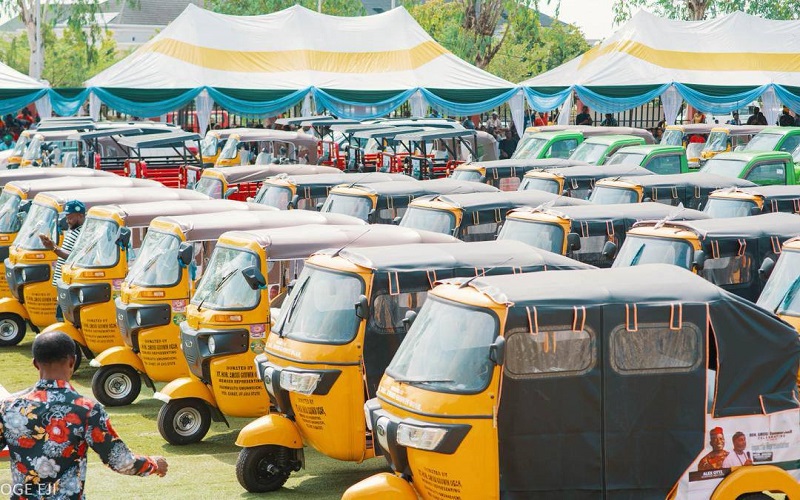
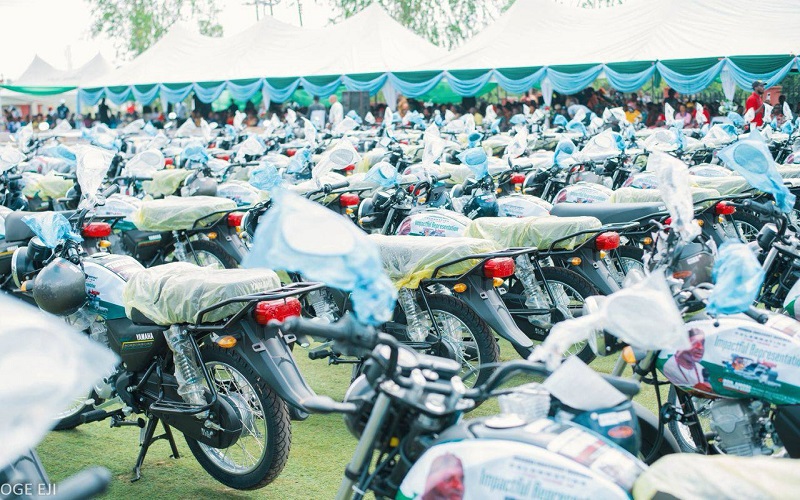
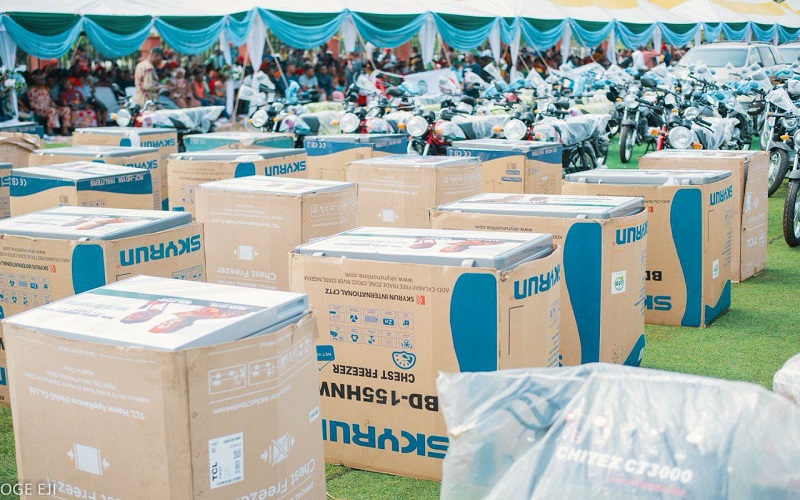
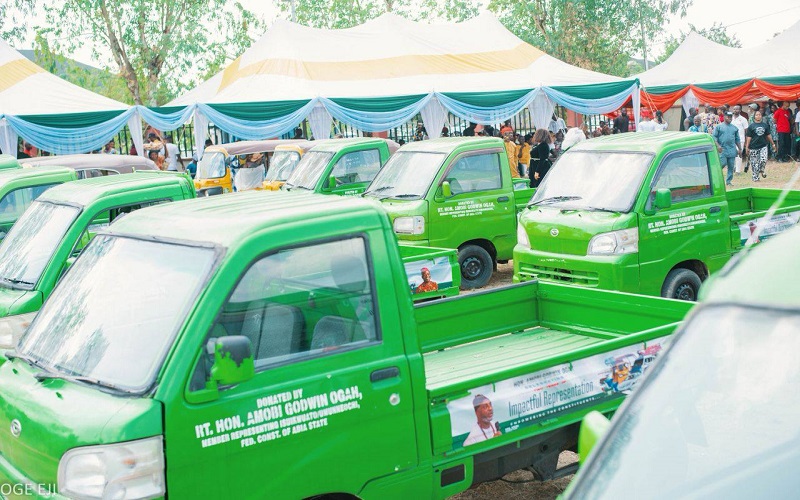
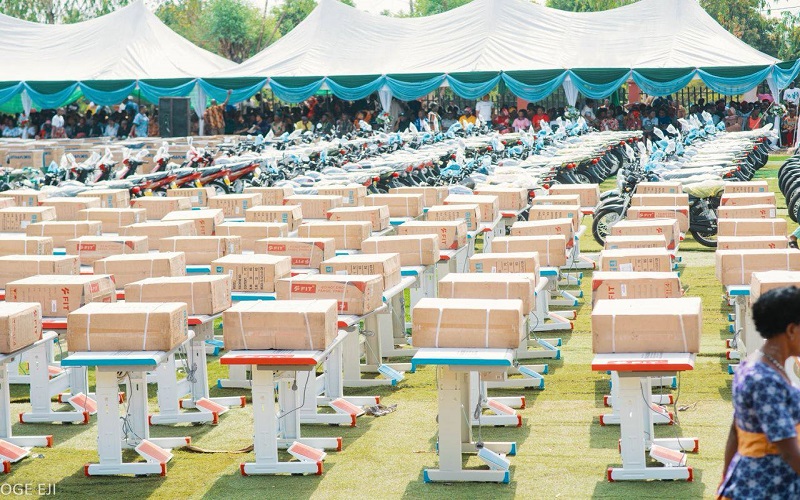
Hundreds of constituents, youths, artisans, traders, widows, transport operators, and the elderly, returned home with brand-new mini-buses, tricycles, pickup vans, motorcycles, sewing machines, grinding machines, and deep freezers. It was a spectacle never before witnessed in Isuikwuato/Umunneochi. It was hope made tangible.
Yet, this extraordinary empowerment is only the latest chapter in what has become an audacious, well-rounded renaissance for the constituency.
A Legislator Driven by Purpose, Anchored in Service
Hon. Ogah entered the Green Chambers with a clear and compelling mission: to make democracy visible where it matters most, among the people. For too long, the constituency had endured insecurity, near infrastructural decay, and political abandonment. His mandate was therefore, not just to represent Isuikwuato/Umunneochi; it was to revive it.
His legislative engagements quickly set him apart. His first motion on the need to curb incessant killings and kidnappings in the constituency led to the creation of a special House Adhoc Committee and ultimately birthed Operation Crush, a security initiative that has drastically reduced insecurity and restored normalcy to communities that once lived under the shadow of fear.
Hon. Ogah’s legislative strength extends far beyond security matters. His bill for the establishment of the Organic Agriculture and Food Safety Research Institute at Ulonna North represents a clear effort to revolutionize agricultural practice and ensure food safety across the Southeast. He also proposed a bill for a Federal College of Nursing to expand access to healthcare education and bridge manpower gaps in the region.
Moreover, he has relentlessly spearheaded the creation of Etiti State from the existing five states in the Southeast, and the people are waiting expectantly for this long-desired dream to become a reality. His leadership in this regard has amplified the call for equity, representation, and balanced development within the geopolitical zone.
During plenary debates, his interventions often command national attention. His powerful call for the reconstruction of the historic Mmam Bridge, destroyed during the civil war and abandoned for 55 years, stirred the conscience of the nation. The House subsequently passed a resolution urging the Niger Delta Development Commission (NDDC) to commence immediate reconstruction, tasking the Committee on Legislative Compliance to monitor progress.
His continuous advocacy on public health, including his call for subsidized and free malaria drugs across the country, further cemented his credibility and led to his appointment as Chairman, House Committee on HIV/AIDS, Tuberculosis, and Malaria Control.
Infrastructure That Speaks for Itself
Across Isuikwuato/Umunneochi, Hon. Ogah’s impact is visible in concrete, transformative projects that have begun to reengineer local economies and strengthen social welfare.
He facilitated the opening of access roads into the Ulonna North farm settlement, improving the movement of produce and supporting agribusinesses. The once-abandoned Isuikwuato General Hospital now stands refurbished and upgraded with solar-powered lighting and modern medical equipment. In Achara, he secured approval for the conversion of the community hospital into an annex of the Federal Medical Centre, Umuahia, thus bringing advanced medical care closer to rural dwellers.
His health-focused interventions continue with the construction of a Mother and Child Hospital in Mbalano and a modern hospital in Lokpa, Umunneochi. These efforts demonstrate his commitment to decentralizing healthcare and ensuring equitable access for all communities.
Water provision has also received comprehensive attention. Solar-powered boreholes now serve Uturu, Isuikwuato, Isuochi, Umuchieze, and Nneato, ending years of water scarcity and reducing the daily hardships once faced by residents.
His imprint on education is equally remarkable. Through the National Senior Secondary Education Commission (NSSEC), he attracted a ₦1.4 billion federal upgrade of Uturu Secondary School. He completed new classroom blocks at Eziama Nneato Model Secondary School, constructed six classroom blocks in Nneato, and delivered two additional blocks at Onuaku, Uturu. He also electrified the ABSU International Secondary School and installed solar streetlights across the entire ABSU community, significantly improving safety and night-time activity.
In the commercial sector, Hon. Ogah has reengineered rural trade infrastructure. The Ukwunwangwu Daily Market has been reconstructed and fitted with solar lights, transforming it into the largest open market in Abia North. Solar streetlights have also been installed at Eke Ndiawa and Eke Amiyi markets to strengthen night-time commerce. The reconstruction of the Ukwunwangwu–Ekeukwu road has further boosted trade, and the ongoing development of the modern Lokpanta Market is expected to reposition the constituency as a regional commercial hub.
Road projects continue to expand, including the ongoing dual-drainage Obiulo–Lekwesi road in Umunneochi. In the sports and youth development space, the construction of the Uturu Township Stadium signals a new chapter for youth engagement, recreation, and community events.
Empowerment as a Way of Governance
The depth of Hon. Ogah’s empowerment philosophy lies in its continuity and targeted design. It is not an occasional gesture; it is the backbone of his governance model.
His early empowerment actions included the distribution of 600 bags of rice, cash assistance, and clothing to vulnerable groups, followed by the donation of cars, buses, motorcycles, and various machines to support small-scale enterprise. In 2025, he expanded this commitment with tailored interventions for rural women, including cash palliatives and an extensive skills acquisition programme for women across the constituency.
His educational empowerment remains unmatched. He awarded 22 full scholarships to students at the Abia State College of Health Sciences and Management Technology and provided 66 additional scholarships across all 22 wards. He paid WAEC fees for 154 students in 2023/2024 and another 250 in 2024/2025. In line with global trends, he trained hundreds of youths in ICT and provided brand-new laptops to support digital literacy.
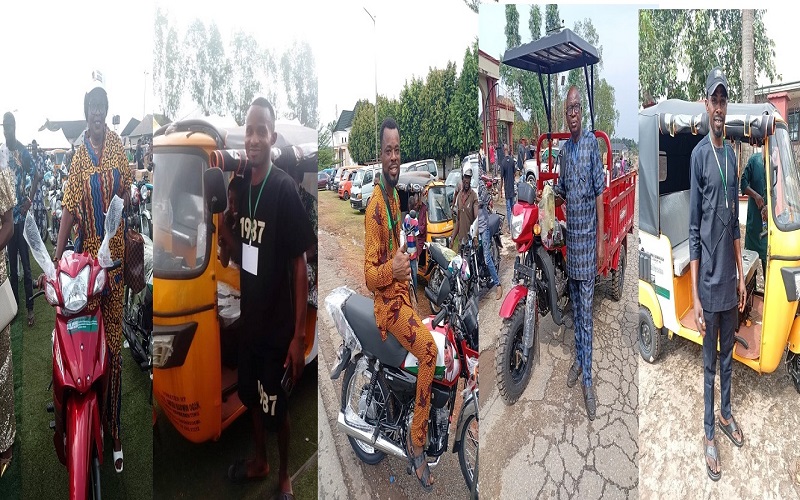
But nothing compares to the recent one-billion-naira empowerment programme that has now rewritten the narrative of constituency engagement in Nigeria. The distribution of mini-buses, tricycles, pickup vans, motorcycles, sewing machines, grinding machines, and other tools has unlocked economic opportunities for hundreds of households. For many, it is the birth of small businesses, the restoration of dignity, and the beginning of financial independence.
Accountability, Accessibility, and a New Governance Culture
In February 2025, Hon. Ogah became the first lawmaker in the history of the constituency to convene a Town Hall meeting, reinforcing his commitment to transparency, accountability, and citizen engagement. At the event, he declared that representation without engagement is like a tree without roots, affirming his resolve to remain grounded in the aspirations of his constituents.
His steady focus, even in the face of political distractions and orchestrated mischief, has strengthened the trust reposed in him by the people. His leadership is not transactional; it is transformational.
A Legacy Still Unfolding
As Hon. Amobi Godwin Ogah advances into the third year of his tenure, he has already defined what effective representation should look like- vision-driven legislation, people-centred projects, strategic advocacy, inclusive empowerment, and an unbroken connection with the grassroots.
The recent empowerment programme, in all its grandeur, is more than a political activity; it is a declaration that governance can work when anchored on sincerity, vision, and commitment.
Indeed, Hon. Ogah is not just building infrastructure; he is building people. He is not just sponsoring bills; he is shaping the future. And he is not just representing Isuikwuato/Umunneochi; he is rewriting its story.
With firm foundations already laid, the road to 2027 and beyond appears illuminated—not just by solar lights, but by the renewed hope and confidence of a people who finally feel seen, heard, and empowered.