



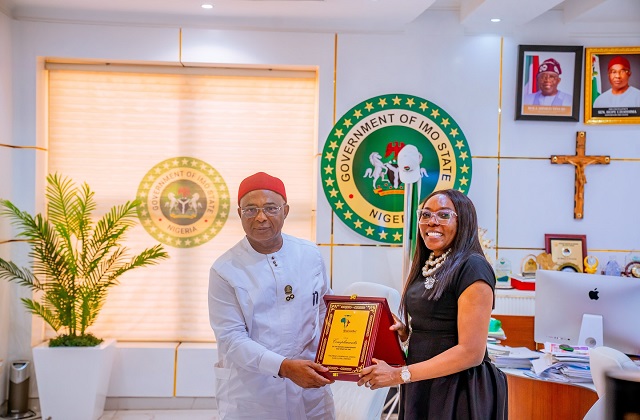
Imo State is steadily positioning itself as one of Nigeria’s most ambitious hubs for digital innovation, a development that has drawn national attention from technology leaders and policymakers alike.
Managing Director and Chief Executive Officer of the Nigerian Communications Satellite (NIGCOMSAT), Jane Egerton‑Idehen, made this observation during a visit to Imo State on Monday, during which she toured the Imo State Digital City and met with Governor Hope Uzodimma.
Describing the initiative as a model for sub-national digital transformation, Egerton-Idehen said the state is quietly building what could become the “Silicon Valley of the East,” driven by deliberate policies, strong partnerships and a focus on youth talent.
According to her, the digital ecosystem emerging in the state reflects a level of intentionality that could redefine how Nigerian states approach technology-driven development.
“The intentionality is unreal,” she noted, highlighting the state government’s effort to combine infrastructure development with talent cultivation and global partnerships.
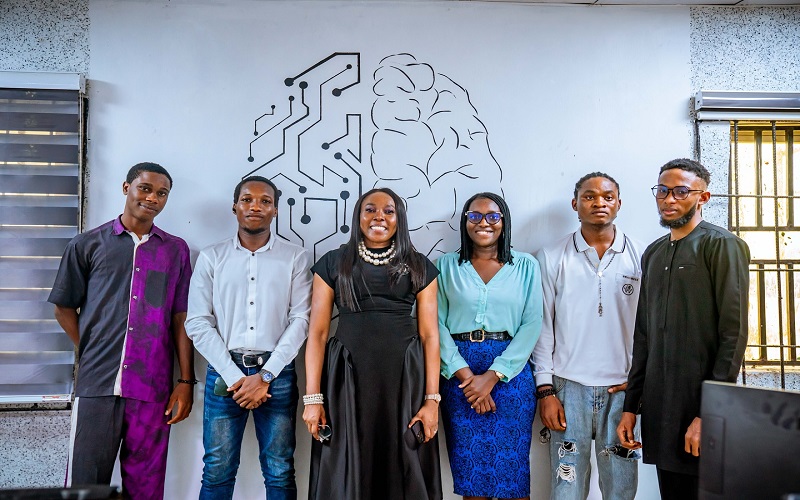
One of the pillars of the Imo model, she explained, is its integration with global technology ecosystems. The state has forged partnerships with major international and local players, including Microsoft, Zinox Technologies, Wakanow, University of California, Berkeley and Huawei, to ensure that the digital infrastructure being developed meets global standards.
Equally notable, she said, is the state’s policy framework. Imo became the first Nigerian state to establish a dedicated Ministry of Digital Economy, currently led by Dr Chimezie Amadi, which enables a streamlined pipeline from policy formulation to project execution.
Another key component of the strategy is talent development. Through the SkillUpImo initiative, more than 30,000 young people are trained annually in digital skills. Participants are not only trained but also equipped with laptops and integrated into startup ecosystems and state development teams.
Egerton-Idehen noted that the Imo Digital City is designed as an integrated innovation ecosystem rather than a standalone project. Facilities within the complex include a business process outsourcing and call centre hub, robotics laboratory, artificial intelligence training lab, phone and laptop repair and assembly units, as well as a digital advertising company, Admint.
“The Digital City isn’t a silo,” she said. “It functions as the operating system powering innovation across sectors, from transportation to healthcare.”
She also commended the state for prioritising action over bureaucracy, noting that several startups within the ecosystem are already generating revenue even before the full infrastructure build-out is completed.
One such initiative is the MyImo App, a digital portal designed to provide a one-stop platform for government services, including business-to-business and government-to-business transactions. The platform has already attracted more than 50,000 users in a state with a population of about 5.4 million.
Beyond the infrastructure and policy frameworks, Egerton-Idehen said the most inspiring aspect of her visit was witnessing the enthusiasm and creativity of the young innovators driving the ecosystem.
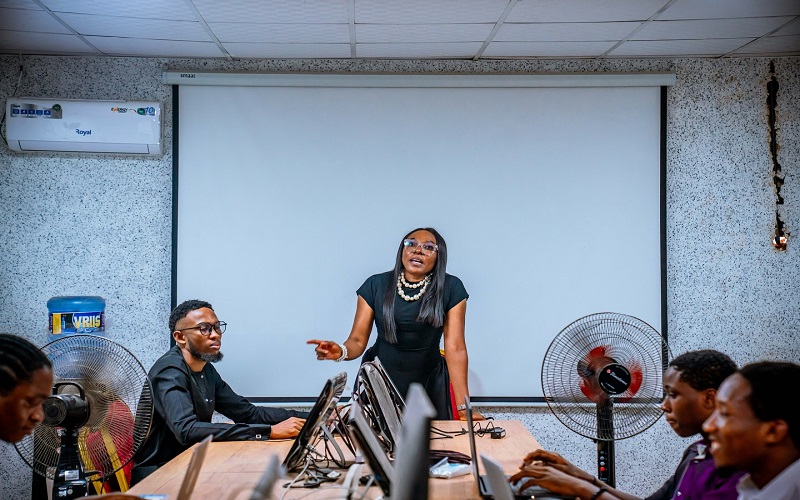
Touring the Digital City, the NIGCOMSAT CEO encountered rooms filled with developers, designers and entrepreneurs actively building solutions, pitching ideas and exploring opportunities for scaling their innovations.
“Room after room, the energy was electric,” she said. “Young people were coding, debating ideas and building solutions that could scale beyond their communities.”

She described Nigeria’s youth population as the country’s most valuable asset. “Nigeria’s biggest asset isn’t oil. It’s the brilliance of our young people,” she added.
During the visit, she interacted with teams behind several projects and startups within the Digital City, including the MyImo App Group, the IDCL Software Development Team and Admint.
Egerton-Idehen also noted emerging signs that the state’s technology ecosystem is attracting wider industry attention, with reports that traders and technology entrepreneurs from Computer Village, Nigeria’s largest technology market, are considering establishing operations in the state.
She encouraged founders and technology leaders across the country to take note of the evolving opportunities in the region.
“Imo is no longer just the heartland,” she said. “It is becoming a premier launchpad for startups.”