



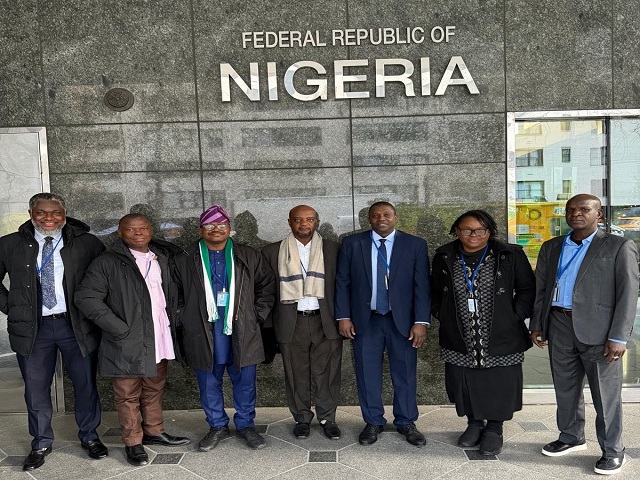
Nigeria has stepped forward as a continental trailblazer, unveiling a comprehensive strategy to localise the WSIS+20 commitments and accelerate Africa’s digital transition.
By anchoring its roadmap in robust infrastructure, transparent internet governance, and advanced cybersecurity, Nigeria is not only driving national transformation but also positioning Africa as a central player in the global digital future.
The strategy was presented in New York at Nigeria’s high-level side event, “Re-Imagining Digital Cooperation for Sustainable Development: From WSIS+20 Vision to Local Action.”
The initiative underscores Nigeria’s ambition to translate global digital resolutions into tangible outcomes that foster inclusive growth and sustainable development across the continent.
Speaking at the event, Kashifu Inuwa, Director General of the National Information Technology Development Agency (NITDA), represented by Dr. Dimie Shively Wariowei, explained that Nigeria’s approach is deliberately aligned with the four core activity areas under the WSIS+20 review process.
This alignment, he noted, provides a practical framework for ensuring that international digital commitments deliver measurable impact at the national and regional levels.
Inuwa identified digital infrastructure as the bedrock of localisation, pointing to persistent challenges in extending connectivity to underserved communities, and stressed that affordability and digital literacy remain critical barriers to inclusion.
To overcome these hurdles, Nigeria has embraced Public-Private Partnership (PPP) models. In collaboration with the World Bank, the country is implementing a landmark fibre-optic project spanning 90,000 kilometres nationwide, designed to dramatically expand connectivity.
He further revealed that Nigeria’s current National Broadband Plan is nearing completion, with a renewed five-year plan set to drive deeper broadband penetration as a catalyst for economic growth and digital access.
On internet governance, Inuwa highlighted Nigeria’s active role in the Internet Governance Forum (IGF), where the country convenes government, private sector, civil society, and the technical community to foster inclusive dialogue.
Cybersecurity, he added, is equally central, with Nigeria strengthening its legal framework through a revised Cybersecurity Act awaiting parliamentary approval — a move aimed at safeguarding users and critical infrastructure.
Inuwa emphasized Nigeria’s broader ambition: to champion Africa’s digital cooperation agenda. He underscored the importance of coordinated national data collection to ensure Africa’s progress is effectively tracked and represented globally.
Sustained engagement, he concluded, will ensure that WSIS+20 commitments translate into real impact for African nations.
Stakeholders at the event commended Nigeria’s leadership. Jennifer Chung, Co-Convener of the Informal Multi-Stakeholder Sounding Board (IMSB), praised Nigeria’s inclusive delegation and commitment to meaningful WSIS+20 implementation.
She stressed the importance of localised follow-up mechanisms, such as IGFs, NRIs, and youth-led forums, in advancing both the 2030 Agenda and Africa’s Agenda 2063.
Chung also drew parallels with Asia-Pacific, noting shared challenges around affordable connectivity. She emphasized that expanding broadband and reducing costs are vital to closing digital divides across the Global South.
Beyond connectivity, she urged inclusive participation in emerging technologies like artificial intelligence and quantum innovations, ensuring that citizens everywhere benefit from digital transformation.
By aligning global commitments with local realities, Nigeria is not only accelerating its own digital transition but also offering a blueprint for Africa’s collective digital future.
The country’s leadership in infrastructure, governance, and cybersecurity signals a new era where Africa’s voice is amplified in shaping the world’s digital landscape.
