



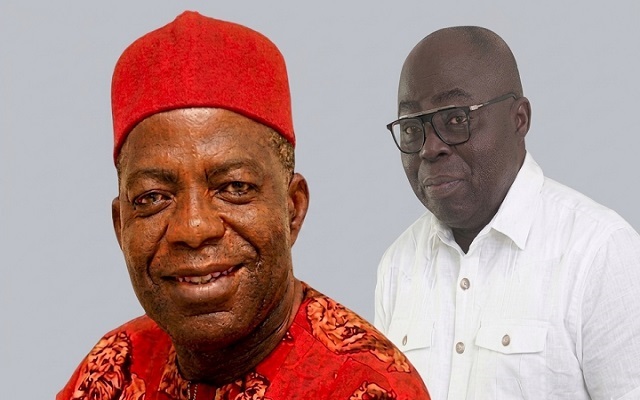
By Sunday Afurobi
As Dr. Alex Chioma Otti marks three years in office as Governor of Abia State on May 29, 2026, the story of Abia State has become one of renewal, restoration and responsible governance.
Across the state, from Aba to Ohafia, from Umuahia to Umunneochi, the footprints of purposeful leadership have become increasingly visible in roads, healthcare, education, power infrastructure, transportation, security, digital economy, and economic reforms.
When Governor Otti assumed office in 2023, Abia was weighed down by decayed infrastructure, crippling insecurity, weak public institutions and declining public confidence. Three years later, the narrative has changed significantly. Through a combination of fiscal discipline, strategic planning and people-oriented governance, the administration has steadily repositioned Abia as one of Nigeria’s fastest-transforming states.
Nowhere is this transformation more symbolic than in Umunneochi Local Government Area, a region that once battled insecurity and infrastructural neglect but today stands as one of the strongest examples of the governor’s development vision in action.
A New Development Philosophy for Abia
The Otti administration came into office with a clearly defined mission: to restore the dignity of Abians through transparent governance, infrastructure renewal and human capital development. Over the last three years, that vision has translated into measurable progress across critical sectors.
In infrastructure, the government has completed over 414 roads spanning more than 864 kilometres across the state, many fitted with drainage systems and streetlights. Landmark projects such as Port Harcourt Road, Aba, Aguiyi Ironsi Boulevard and the Omenuko Bridge have redefined connectivity and economic mobility within the state.
Transportation has equally received unprecedented attention. The completion of the Umuahia Multimodal Transport Terminal, the installation of bus shelters across major cities and the introduction of electric buses signal a government thinking beyond the present and investing in sustainable urban mobility.
In healthcare, the administration has undertaken the retrofitting of hundreds of primary healthcare centres while upgrading specialist and general hospitals across the state. Over 800 healthcare professionals have also been recruited to strengthen medical service delivery.
The education sector has witnessed comprehensive reforms through infrastructural upgrades in tertiary institutions, restoration of accreditation in key institutions, recruitment of teachers and the construction of smart schools designed to prepare students for a technology-driven future.
The governor’s economic management style has also attracted commendation. Within three years, the state reportedly reduced its debt burden by nearly 60 per cent while simultaneously improving transparency, accountability and internally generated development capacity.
These reforms are not abstract policy statements. Their impact is increasingly evident in local communities like Umunneochi, where residents can directly connect governance to improvements in daily life.
Restoring Peace and Security in Umunneochi
Perhaps the most defining intervention of Governor Otti in Umunneochi was the restoration of security and public confidence.
Before the current administration came on board, Umunneochi had become synonymous with kidnapping, criminal activities and fear. Many communities experienced severe disruptions as hoodlums reportedly took over strategic corridors, forcing residents and travellers into constant anxiety.
Understanding that development cannot thrive in an atmosphere of insecurity, Governor Otti moved swiftly immediately after assuming office. Through strategic security operations, deployment of technology and the establishment of Operation Crush, the administration aggressively confronted criminal networks operating within Umunneochi and surrounding areas.
The results have been remarkable. Communities that once lived under fear now enjoy renewed peace and stability. Economic and social activities have gradually returned, and residents can travel more freely across the local government area.
This transformation earned the governor widespread commendation from the Umunneochi Traditional Rulers Council, which publicly acknowledged his decisive leadership in restoring sanity to the area. Recently on a visit to the governor, the royal fathers described Umunneochi as one of the earliest beneficiaries of the administration’s governance interventions and praised the governor for taking bold actions at a critical time.
Today, the restoration of peace in Umunneochi stands as one of the strongest demonstrations of Governor Otti’s belief that security is the foundation upon which every meaningful development must rest.
Infrastructure Revolution Reaches Umunneochi
Beyond security, Umunneochi has become an active construction hub under the present administration.
One of the flagship projects currently reshaping the area is the 11.27-kilometre Mbala–Umuaku–Ngodo Road. The strategic road project is expected to strengthen connectivity among communities while improving economic links between Abia and neighbouring South-East states.
For agrarian communities heavily dependent on transportation for the movement of farm produce, the road represents far more than physical infrastructure. It is an economic lifeline capable of boosting agricultural commerce, reducing transportation costs and attracting new investment opportunities.
The project also includes drainage systems, culverts and streetlights in built-up areas, reflecting the administration’s emphasis on durable and modern infrastructure.
In addition to the Mbala–Umuaku–Ngodo Road, the governor has announced plans for the reconstruction of the Leru–Lekwesi–Lokpanta–Lokpaukwu Road and directed an assessment of the state of the 57-year-old abandoned Mmam Bridge for possible intervention. These commitments reinforce the administration’s resolve to ensure that no part of Abia remains disconnected from development.
Across Abia State, Governor Otti’s infrastructure agenda is built around accessibility, economic expansion and regional integration. In Umunneochi, that vision is becoming increasingly visible with every completed kilometre of road.
Revitalising the Rural Economy
Governor Otti’s development model extends beyond urban renewal to include rural economic empowerment, and Umunneochi is benefiting significantly from this approach.
The administration has approved the construction and retrofitting of four modern markets in Mbala, Ngodo, Nneato and Lekwesi Umuchieze. These markets are designed to transform rural commerce through the provision of modern facilities such as lock-up shops, solar power systems, boreholes and sanitary conveniences.
For local traders and farmers, these projects represent new opportunities for structured commercial activities within safer and more organised environments.
The governor has also announced plans to establish a multi-billion-naira agro-industrial processing facility in Umunneochi. This initiative is expected to integrate agricultural production, processing and aggregation while positioning the local government area as a major agro-economic hub within Abia State.
Given Umunneochi’s strong agricultural potential in crops such as cassava, yam, beans and cashew, the proposed agro-processing facility could become a major driver of employment, value addition and export-oriented agribusiness.
Work is gathering momentum at the multi-million naira Piggery Project in Amuda Isuochi, a landmark agricultural investment poised to drive a livestock revolution in Umunneochi Local Government Area. Upon completion, the project is expected to create employment opportunities for Ndi Umunneochi, stimulate local economic growth, and reinforce the area’s emergence as a major hub for modern agro-allied enterprise.
A few days ago, in my capacity as the Executive Mayor of Umunneochi LGA, I was at Obinolu Ngodo to inspect the site for the proposed Garri Processing Plant. Work on the site is expected to commence in no distant time.
This deliberate focus on agriculture and rural enterprise reflects Governor Otti’s broader strategy of building a productive economy that empowers communities from the grassroots upward.
Power, Water and Human Development
The administration’s interventions in public utilities are also impacting communities across Abia, including Umunneochi.
Through the Light Up Abia initiative, transformers and solar-powered streetlights have been distributed to communities while electricity reforms continue to expand access to power supply. The establishment of the Abia State Electricity Regulatory Authority signals a long-term commitment to stable and decentralised electricity development.
In water infrastructure, the government has intensified efforts to restore potable water supply by rehabilitating major water schemes across the state. These interventions align with the administration’s broader public health and environmental sustainability agenda.
Equally important is the governor’s investment in people. From healthcare recruitment to education reforms and digital innovation programmes, the administration continues to prioritise human capital development as the engine of sustainable growth.
This people-centred governance approach explains why many residents across Abia increasingly view the current administration as one focused not merely on projects, but on improving the quality of life.
Umunneochi and the Future of a New Abia
Three years after Governor Alex Otti took over the reins of leadership, Umunneochi has emerged as a compelling example of what focused governance can achieve.
The restoration of security, the expansion of road infrastructure, the revitalisation of rural markets, and the proposed agro-industrial investments collectively point to a local government area gradually reclaiming its economic and social potential.
At the state level, the administration’s achievements in roads, healthcare, education, transportation, power and fiscal reforms continue to redefine public expectations of governance in Abia.
While challenges still exist, the trajectory of development under Governor Otti suggests a government determined to sustain momentum and consolidate gains.
For many residents of Umunneochi and indeed Abia State, the last three years have not merely been about promises. They have been about visible action, measurable progress and renewed confidence in leadership.
As Governor Alex Otti celebrates three years in office, the evidence across Abia, and particularly in Umunneochi, points to an administration steadily building the foundations of a safer, stronger and more prosperous state.
**Hon. Chief Sunday Afurobi, the Executive Mayor of Umunneochi Local Government Area of Abia State, writes from Isuochi.
