



News Highlights
- Dinesh Balsingh emphasized that businesses must move beyond traditional telecom services and adopt intelligent platforms like AI, IoT, and satellite connectivity to drive productivity and resilience.
- The Airtel CEO stressed that organisations investing today in integrated digital infrastructure will lead Nigeria’s economic growth in the next decade.
Nigeria’s business leaders have been urged to fast-track the country’s digital transformation by embracing intelligent technology platforms that foster innovation, enhance productivity, and drive sustainable economic growth.
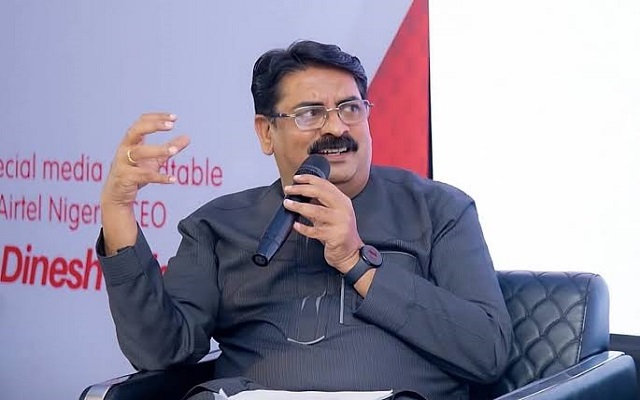
Making the call at the Lagos Business School (LBS) Breakfast Club, Airtel Nigeria’s Chief Executive Officer, Dinesh Balsingh, said businesses must look beyond traditional connectivity and leverage emerging digital technologies to remain competitive in an increasingly technology-driven economy.
Speaking on the theme, “From Telco to TechCo,” Balsingh noted that the telecommunications industry is undergoing a profound transformation, evolving from a provider of connectivity services into the backbone of enterprise innovation and Nigeria’s digital economy.
According to him, while earlier generations of mobile technology focused on connecting people through voice services, internet access, and mobile broadband, the next phase of growth will be driven by intelligent ecosystems powered by artificial intelligence (AI), the Internet of Things (IoT), satellite connectivity, and integrated enterprise solutions.
“The role of telecommunications has fundamentally changed. Businesses are no longer asking only for connectivity; they want solutions that improve productivity, strengthen security, and accelerate digital transformation. That is the journey Airtel is leading. We are evolving from a telecommunications company into a technology partner that helps organisations unlock growth and create long-term value,” he said.
Noting that value is no longer measured by the volume of data consumed but by the business outcomes technology delivers, he highlighted a key shift in telecommunications to AI-powered customer protections, industry-specific digital solutions, IoT platforms, and hybrid satellite-terrestrial networks that extend reliable connectivity to underserved communities and remote business locations.
“Technology should do more than connect people. It should protect them, simplify operations, and help businesses make better decisions. Investments are now focused on building smarter, more resilient digital infrastructure that supports organisations across every sector of the economy.”
He added that sectors including retail, education, healthcare, government, manufacturing, and oil and gas increasingly require integrated digital solutions that combine connectivity with cloud services, intelligent networking, surveillance, automation, and data analytics.
Balsingh also urged business leaders to rethink their digital priorities, noting that future competitiveness will depend on how connected, intelligent, secure, automated, and resilient their organisations become.
“The organisations that will lead the next decade are those that invest today in intelligent digital infrastructure. Our customers are no longer buying connectivity alone. They are investing in productivity, intelligence, and digital transformation.”
The session, which also featured the IMF Resident Representative for Nigeria, Christian Ebeke, formed part of the Lagos Business School Breakfast Club, a platform that brings together business executives and industry leaders to examine emerging trends shaping the future of enterprise and economic development.
Airtel Nigeria’s participation reinforced its commitment to supporting Nigeria’s digital transformation by enabling businesses with innovative technologies that improve efficiency, strengthen resilience, and unlock new opportunities for growth across the country’s rapidly evolving digital economy.