



By Rommy Imah
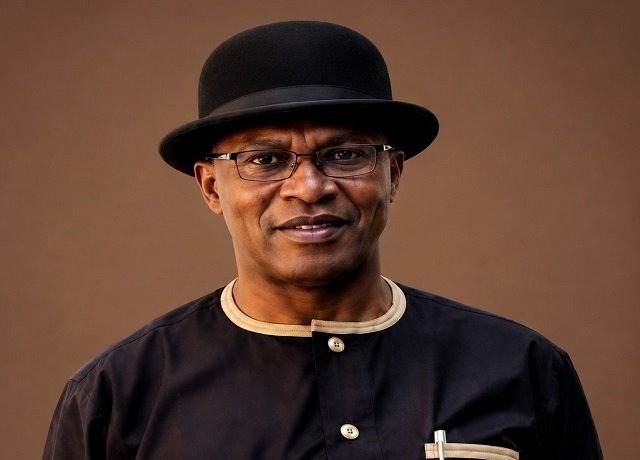
When Engr. Ochiabuto Orji assumed the leadership of the Isuochi Community Development Association (ICDA) in January 2024, he inherited a community confronted by daunting challenges, including insecurity, disunity, youth unemployment and idleness, infrastructural decay, weak institutional structures and the growing concern over Isuochi’s relevance in the affairs of Abia State and Nigeria.
Two years and eight months later, as his administration prepares to hand over the leadership baton, the record before the people of Isuochi is one of an administration that has not merely occupied office, but has attempted to redefine what community leadership should represent.
Indeed, the valedictory account of the Engr. Orji-led Executive Committee presents a remarkable story of a leadership that confronted difficult circumstances, introduced new structures, mobilised resources, strengthened security, promoted unity, pursued institutional reforms and initiated projects whose impact could extend well beyond its tenure.
For many Isuochi people, the approaching departure of the National President is therefore not being received with indifference. Rather, across the nine towns that make up Isuochi, there is palpable lamentation that a leadership which many describe as exceptional is approaching the end of its tenure.
A difficult inheritance, an audacious response
Engr. Orji did not seek the presidency of ICDA merely for the prestige associated with the office. His decision to contest, according to his valedictory account, was driven by the conviction that the problems confronting Isuochi could no longer be addressed effectively from the sidelines.
The issues were fundamental: insecurity had moved into and through Isuochi dangerous; businesses were suffering; government institutions had withdrawn; young people needed opportunities; infrastructure required attention; and the unity of the people needed to be strengthened. The administration subsequently made security one of its foremost priorities.
With the support of Izu Umunneochi and the Abia State Government, coupled with sustained intervention by the ICDA leadership, the security situation improved considerably. The administration supported Operation Crush, the military at the Forward Operating Base and police formations in Nkwoagu and Mbala.
It also reorganised and strengthened the Isuochi Vigilante Group, trained 14 personnel and ensured that their stipends were paid from funds raised through the generosity of community patrons.
The administration’s engagement with security agencies was equally significant. Regular meetings and information-sharing arrangements were established with the police, while an Isuochi Security Committee was constituted to coordinate efforts against insecurity.
The result, according to the outgoing administration, is a community that is considerably safer than it was when it assumed office. That achievement becomes even more remarkable when considered against the financial realities confronting the administration.
Leadership without a deep treasury
Perhaps one of the most compelling aspects of the Orji administration is the story of what it achieved with remarkably limited institutional revenue.
The valedictory account states that throughout its two years and eight months in office, the administration received only N26,000 in development levy from ICDA branches, while the 37 autonomous communities reportedly remitted nothing.
Yet, rather than allowing the financial limitations to paralyse the association, the administration cultivated a culture of voluntary support and accountability, mobilising patriotic Isuochi sons and daughters to finance critical interventions.
This is where Engr. Orji’s much-praised prudence and financial discipline become particularly noteworthy.
The administration established separate operational accounts for ICDA, the Nwalowa project, the ICDA Rescue Team and the Ochi 1 burial, creating a structure for transparent and auditable transactions. It also stated unequivocally that it was not indebted to any person or organisation.
That approach represents more than bookkeeping. It reflects a leadership philosophy in which stewardship of communal resources is treated as a public trust.
The handling of the burial of Ochi 1, HRM Eze Dr Sir G.I. Ezekwesiri, offers perhaps the clearest illustration. Despite the intrigues and difficulties surrounding the event, the administration raised approximately N58.9 million, spent about N53.62 million and recorded a balance of approximately N5.31 million.
For a community association operating with such limited statutory revenue, the ability to mobilise resources for major communal responsibilities while maintaining financial records is a feat deserving recognition.
From a failed hall to a N500 million rescue
One of the most ambitious interventions of the administration is its attempt to resolve the long-running crisis surrounding the Isuochi Unity Square Hall.
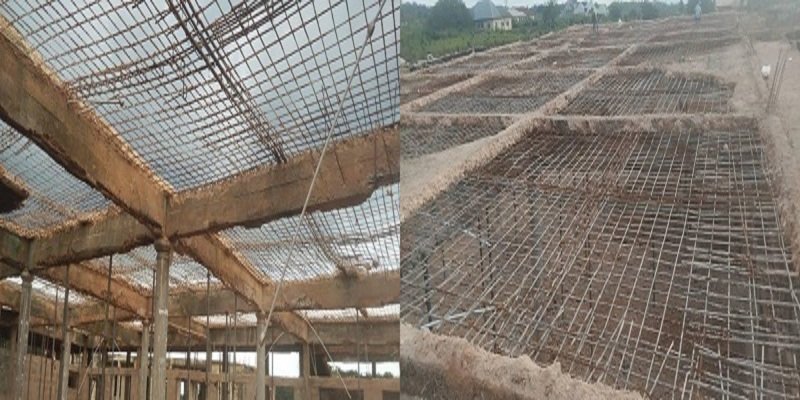
Rather than allowing the controversial project to remain a symbol of unfinished communal aspirations, the administration commissioned a technical inspection, reviewed recommendations and mobilised progressive Isuochi sons into a Rescue Team.
The team has pledged N500 million towards the reconstruction and completion of the hall, with more than N120 million already reportedly paid into the dedicated project account at the time of the valedictory report.
The significance of this initiative extends beyond bricks and mortar. Unity Square is conceived as a physical embodiment of the community’s collective identity, and its eventual completion could become one of the most enduring legacies of the administration.
The administration also secured the Unity Square land with the assistance of Logu 1, HRM Eze Okey Chukwuji, and the Umumeze community, while establishing a Projects Monitoring Team to oversee projects across Isuochi, regardless of their sponsors.
Rebuilding institutions, not just projects
What makes the Orji administration particularly distinctive is that its interventions were not limited to physical projects.
It pursued the formal registration of ICDA with the Corporate Affairs Commission, transforming the association into a recognised legal entity capable of formally transacting business with individuals and institutions.
It also successfully reviewed the association’s 2015 constitution, with the new document passed in April 2026 to reflect contemporary realities and provide a framework for what the administration describes as “Making Isuochi Great Again.”
These institutional reforms may not generate the immediate excitement associated with roads, buildings or security equipment, but they could prove among the most consequential achievements of the administration.
By strengthening ICDA’s legal and constitutional foundations, the Orji administration has sought to build an institution capable of surviving individual personalities and administrations.
A new architecture of communication and inclusion
Another defining feature of the Orji leadership has been its embrace of communication and inclusiveness.
Several stakeholder platforms were created to facilitate the free and timely dissemination of information, including platforms for traditional rulers, town union presidents and secretaries, autonomous communities, youths, Ichies and other stakeholders.
The administration also established the Ndi Ichie Isuochi Forum and organised a summit for Ndi Ichie, with traditional rulers in attendance.
This approach reflects Engr. Orji’s distinctive leadership style: open communication, institutional consultation, stakeholder inclusion and the deliberate use of technology to keep the community connected.
It is therefore unsurprising that one of the reactions to his valedictory speech described him as a “moving library and living museum” characterised by humility, professionalism, transparency, accountability, innovation and inclusiveness.
Giving Isuochi a stronger voice
The administration also recognised that community development requires more than internal organisation. Isuochi must have a voice where decisions affecting its interests are made.
That thinking gave birth to the Isuochi Advocacy Board, comprising technocrats, bureaucrats, captains of industry, military personnel and businessmen. The board was mandated to pursue opportunities and influence government and corporate decisions in areas of mutual interest to Isuochi.
The initiative is aimed particularly at improving opportunities for the community’s youths and increasing Isuochi’s visibility before government and corporate institutions.
This is a novel dimension of community leadership, moving from merely asking government for favours to deliberately building an institutional mechanism capable of advocating for the community.
Unity as a development strategy
Perhaps the greatest challenge inherited by the Orji administration was not infrastructure or finance, but the question of unity.

The administration established a Peace and Reconciliation Committee and deliberately reached out to aggrieved individuals and communities. It also used communal events and projects as platforms for bringing people together.
The burial of Ochi 1 became one such defining moment. Despite the challenges surrounding the event, the administration successfully coordinated the burial in a manner that brought sons, daughters and traditional rulers together under the broader identity of Isuochi.
The administration also addressed the longstanding burden associated with December burials by harmonising dates and restricting certain burial periods. Compliance with the new arrangement had reportedly risen above 75 per cent, bringing greater predictability to the community’s social calendar and allowing the security architecture to be managed more effectively.
The challenges were real
An honest assessment of the Orji years must acknowledge that the administration did not operate in a perfect environment.
Court cases constituted a persistent challenge. There were also disputes surrounding the Unity Square land, disagreements within and between communities, funding constraints and the difficult circumstances surrounding the burial of Ochi 1.
The administration also confronted the continuing problems of illicit drug use and youth idleness, which it openly admitted remained unfinished business.
Indeed, one of the most admirable aspects of the valedictory account is that it does not pretend that every problem has been solved. Instead, it identifies areas requiring sustained attention from the incoming leadership.
That candour strengthens rather than diminishes the administration’s record.
Why Isuochi is reluctant to let him go
The strongest testimony to any leader is perhaps not what the leader says about himself, but what the people say after witnessing his work.
And the reactions to Engr. Orji’s valedictory address have been unusually emotional.
One respondent lamented missing him in leadership at “this critical period,” declaring that he had “written his name on the marble” and would remain a reference point for future ICDA leadership.
The ICDA Women’s Wing expressed massive love, respect and support for the National President, while others openly called for his return to complete the projects he initiated.
Another reaction argued that returning him would provide continuity, preserve institutional memory and ensure that projects already started are completed. Importantly, the endorsement was framed not as a blank cheque, but as a mandate for completion and accountability.
Bishop Madu Christopher Ihegbori described the innovation introduced by the administration as outstanding and urged that Engr. Orji be allowed to complete what he and his executive had initiated.
Barr. Mrs Chetachi Obi-Nwoke described the period as the first of its kind in recent times and commended the administration for performing beyond expectations.
Agu Gbazuoagu went further, describing Orji as an administrator distinguished by sincerity, honesty and transparency, while crediting him and his executive with restoring decency and credibility to Isuochi.
Other respondents described the administration’s record as “leadership by example,” praised its direction and character, and urged the National President to prepare for another phase of leadership.
Perhaps the most emotional reaction came from Ejike Igula, who simply wrote: “I feel like crying after reading this.” He followed the sentiment with a prayer for God’s continued guidance and protection for the outgoing National President.
These reactions reveal the depth of attachment that has developed around the administration.
A Novel Chapter in Isuochi’s Leadership History
The achievements of the Orji administration are remarkable not necessarily because every initiative undertaken was unprecedented, but because of the sheer breadth of its interventions, delivered within a remarkably short period and amid significant financial and institutional constraints.
From security and institutional reform to community reconciliation, youth advocacy, health inspection, infrastructure monitoring, legal registration, constitutional reform, transparent banking, project financing, traditional leadership engagement, digital communication and community visibility, the administration sought to address virtually every major dimension of communal development.
Its governing philosophy was equally distinctive: build enduring structures, mobilise the people, document transactions, communicate openly, welcome scrutiny, and empower the community to take responsibility for its own future.
This broad-based approach has given the administration’s tenure a distinctive place in Isuochi’s leadership history. The recognition accorded Engr. Orji, therefore, goes beyond personal commendation. It represents, in many respects, an endorsement of a different and more structured model of community leadership, one anchored on accountability, participation, institutional development and a shared sense of ownership.
A legacy still in motion
The greatest irony of a valedictory address is that it often marks an ending while simultaneously revealing how much remains unfinished.
The N500 million Unity Square reconstruction is still underway. The Nwalowa Carnival is scheduled for December 2026. Youth advocacy remains active. Security requires continuous funding. Drug abuse and youth idleness remain challenges. Some legal disputes remain unresolved.
In that sense, the Orji administration’s story is not yet complete. But perhaps that is precisely why the lamentations from Isuochi people across the nine towns are understandable. They are not simply mourning the departure of a National President. They are expressing anxiety about losing momentum.
The people have seen what can be achieved when leadership combines vision with prudence, accountability with courage, and innovation with inclusiveness. They have seen an administration work with limited institutional revenue yet mobilise substantial private support for community priorities.
And they have seen a leader who, by his own account, entered office seeking accountability and is leaving with his stewardship publicly laid before the people. That is a record worthy of commendation.
The prayers of a grateful people
The reactions to Engr. Orji’s valedictory speech have been dominated by gratitude and prayers. Supporters have prayed for his good health, greater grace, divine protection and continued success. Others have invoked God’s blessings upon him and members of his executive for what they describe as a remarkable service to Isuochi.
There is also a recurring prayer that the projects initiated under his watch will be completed and that the gains recorded during his tenure will not be lost. That may ultimately be the most important measure of his legacy.
A leader’s tenure ends, but the institutions he builds, the standards he establishes and the expectations he creates can endure. For Engr. Ochiabuto Orji, the valedictory moment has therefore become something more than a farewell.
It is a public acknowledgement that, in barely two years and eight months, his administration has left an unmistakable imprint on the history of Isuochi Community Development Association.
He came at a difficult moment. He confronted formidable challenges. He mobilised a financially constrained institution. He introduced new ideas and structures. He strengthened security. He pursued reconciliation. He championed transparency. He gave Isuochi a stronger institutional voice.
And, perhaps most importantly, he has left behind a community that now believes it can demand more from its leadership. That is a legacy worth saluting.
As the nine towns of Isuochi prepare for the transition ahead, the dominant sentiment appears clear: whatever the future holds, the Engr. Ochiabuto Orji era has established a new benchmark against which subsequent ICDA administrations will inevitably be measured.
And the prayers of the people, expressed in different voices but with striking consistency, are that God will continue to guide, protect and reward the man many now call Okeosisi, while ensuring that the progress recorded under his watch continues to grow.
For Isuochi, the farewell may be approaching. But the legacy has only just begun.
