



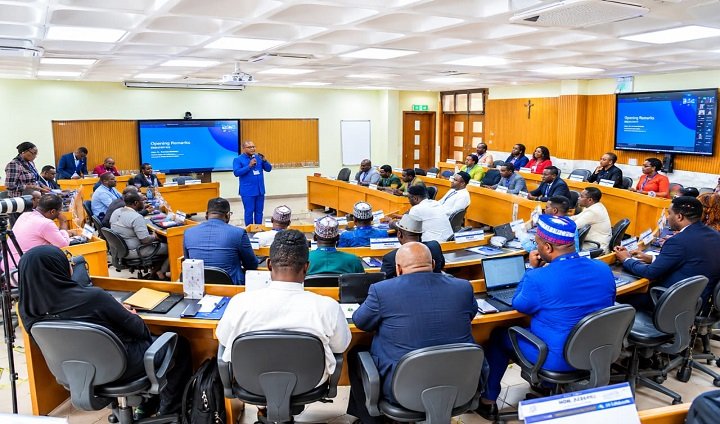
The National Information Technology Development Agency (NITDA) has called for stronger stakeholder participation and renewed commitment to its Strategic Roadmap and Action Plan (SRAP 2.0), stressing that sustained collaboration is critical to achieving Nigeria’s digital transformation ambitions.
The agency said the continued involvement of stakeholders would help assess the effectiveness of ongoing initiatives, identify gaps in implementation and ensure that its programmes remain responsive to the evolving needs of the country’s digital ecosystem.
The Director-General of NITDA, Kashifu Inuwa, represented by the Director of the Special Duties Directorate, Dr Aristotle Onumo, made the call during the SRAP 2.0 Stakeholders’ Engagement held at Lagos Business School, Lagos State.
Inuwa emphasised that the engagement was an opportunity to evaluate progress made under the roadmap, review existing priorities and determine whether the agency’s interventions were delivering their intended impact.
He noted that SRAP 2.0 was developed through extensive stakeholder consultations and collaborative engagements, rather than as an internal document produced without external input.
According to him, stakeholders, including members of Lagos Business School, contributed to the development of the roadmap, making their continued participation in reviewing its implementation essential.
He said the review would also enable the agency to measure its performance against commitments made to stakeholders and determine areas requiring adjustments to improve delivery.
Inuwa commended the leadership of Lagos Business School for sustaining its partnership with NITDA, noting that collaboration and collective intelligence remained indispensable to achieving meaningful progress in Nigeria’s digital ecosystem.
He also acknowledged the contributions of the agency’s personnel, highlighting NITDA’s gradual transition towards becoming an ecosystem platform for digital innovation.
According to him, the agency is moving beyond the traditional approach of issuing regulations, directives and guidelines towards a model that prioritises co-creation and collaboration with stakeholders in developing and delivering digital solutions.
He explained that the shift was necessary to create an enabling environment for innovation while ensuring that digital initiatives generated wider economic and societal benefits.
The NITDA chief noted that the agency had spent the past three years advancing the transition and was approaching its final phase, urging stakeholders to renew their commitment and sustain the momentum needed to achieve the desired outcomes.
Reaffirming the agency’s vision, Inuwa said the goal remained to make Nigeria a digitally enabled nation, fostering inclusive economic development through technological innovation.
He explained that the eight strategic pillars underpinning SRAP 2.0 remained central to achieving this vision and would continue to guide the agency’s priorities and interventions.
He urged stakeholders to critically assess progress across the pillars, particularly in digital skills development, regulatory effectiveness, digital infrastructure and services, entrepreneurship, innovation and the growth of Nigeria’s startup ecosystem.
He also called for closer scrutiny of the implementation of the Startup Act to determine its contribution to strengthening the startup community and promoting innovation-driven enterprise development.
On stakeholder participation, Inuwa stressed the need to ensure that relevant players across the digital ecosystem were carried along, maintaining that effective collaboration was vital to delivering the objectives of Nigeria’s national digital agenda.
He expressed confidence that sustained partnerships, collective commitment and constructive contributions from stakeholders would enable NITDA to address emerging challenges, strengthen implementation and accelerate the country’s digital development.
Inuwa urged stakeholders to embrace the partnership-driven approach, stressing that collective action would be instrumental in building a digitally enabled Nigeria capable of serving as a catalyst for digital transformation across Africa.
