



Nigeria is positioning itself to move beyond conventional outsourcing and establish a stronger foothold in the global digital services economy through artificial intelligence, skilled talent and trusted digital infrastructure.
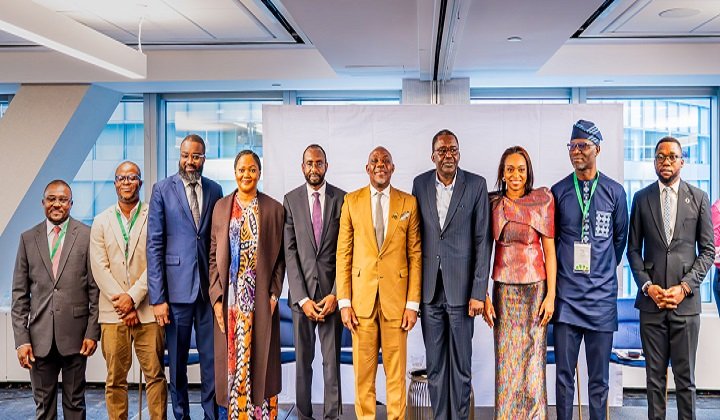
This was the thrust of the intervention by the Director-General/CEO of the National Information Technology Development Agency (NITDA), Kashifu Inuwa Abdullahi, at the “Hire from Nigeria” session organised by the Nigeria Economic and Trade Advancement Programme (NATEP) on the sidelines of the 81st United Nations General Assembly (UNGA81).
Abdullahi joined the Honourable Minister of Industry, Trade and Investment, Dr. Jumoke Oduwole, and the Honourable Minister of Education, Dr. Moruf Alausa, in a strategic discussion focused on impact sourcing, global trade, skills development and inclusive job creation.
The session provided an opportunity to highlight Nigeria’s growing capacity to deliver technology-enabled services to international markets while creating quality employment opportunities at home.
Abdullahi said Nigeria’s competitive proposition must evolve beyond traditional outsourcing, particularly as artificial intelligence rapidly reshapes the global services industry.
He noted that the country has an opportunity to develop a distinctive niche in AI-augmented, IT-enabled services by preparing Nigerians not only to use emerging technologies, but also to understand, develop, shape and create economic value with them.
According to him, Nigeria’s ability to attract and retain global digital business will also depend on the strength of its digital trust ecosystem.
He pointed to the country’s evolving frameworks covering data protection, digital identity, cybersecurity, digital infrastructure assurance, data classification, sovereign cloud and software quality assurance, stressing that trust, security and regulatory certainty are critical to making Nigeria a dependable destination for global digital services.
The NITDA chief further highlighted investments and policy interventions designed to strengthen the infrastructure required to support this ambition.
Among them is Project BRIDGE, which targets the deployment of 90,000 kilometres of fibre infrastructure, as well as the Cloud First Policy and other measures aimed at encouraging private-sector investment in computing infrastructure and AI factories.
Abdullahi also drew attention to the importance of ensuring that Nigeria and other underrepresented communities have a place in the development of the global AI ecosystem.
He cautioned that communities and economies missing from the datasets used to develop intelligent systems risk becoming invisible in the technologies that will increasingly shape economic and social life.
To address this challenge and strengthen indigenous capacity, he referenced initiatives including the National Centre for Artificial Intelligence and Robotics (NCAIR) and the National Artificial Intelligence Strategy, which seek to build local AI capabilities while connecting Nigeria’s talent and innovation ecosystem to opportunities in the global digital economy.
The discussions underscored an emerging shift in Nigeria’s digital ambition—from simply supplying skilled workers to international markets to developing the infrastructure, capabilities and trusted systems needed to capture greater value from the global digital economy.
The DG’s intervention reinforced a compelling proposition for Nigeria: “Our opportunity is not simply to supply talent to the world; it is to equip Nigerian talent with AI, trusted digital infrastructure and globally competitive capabilities to deliver higher-value services to the world.”