



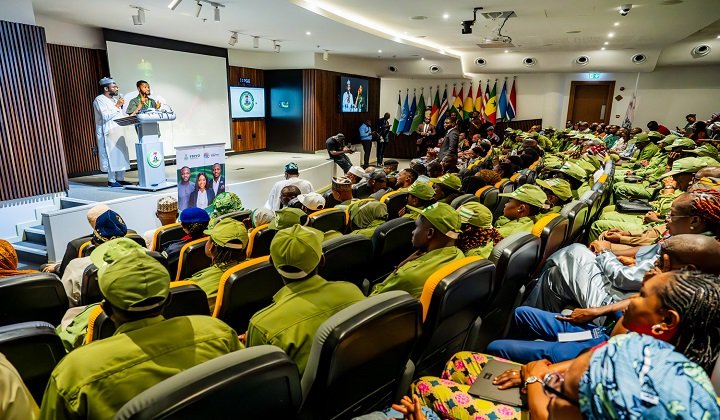
The National Information Technology Development Agency (NITDA) is deploying technology and artificial intelligence (AI) to create a structured pathway for young Nigerians to influence government policy through the maiden National Youth Conference.
The initiative will enable the Agency to capture, analyse and organise ideas and concerns raised by participants, to help government transform the submissions into actionable policy proposals for national development.
NITDA Director-General, Kashifu Inuwa, disclosed this while delivering a goodwill message at the opening ceremony of the conference in Abuja, where he described Nigerian youths as a strategic asset to the country.
Inuwa said the conference was designed to provide a more direct and structured channel through which young Nigerians could communicate their expectations, frustrations and ideas to government.
He noted that although social media platforms such as X, Instagram, Facebook and TikTok have created unprecedented opportunities for young people to express themselves, the sheer volume of online content often makes it difficult to distinguish genuine aspirations and policy ideas from misinformation and other forms of digital noise.

According to him, the conference would provide an avenue for government to “filter the noise” and identify genuine signals emerging from youth conversations, rather than relying solely on fragmented discussions across social media platforms.
“It is a deliberate step to make sure your voices, your aspirations, your ideas are brought closer to the heart of national decision-making. This conference is also for the administration to listen to what you want government to do in terms of the economy, job creation, technology, and creating a greater Nigeria”.
Inuwa announced that NITDA, in collaboration with the relevant ministry, would deploy technology to capture contributions from participants, while AI would be used to analyse and organise the submissions into thematic areas.
He explained that the resulting data would be presented to a committee to provide a clearer understanding of the issues raised by young Nigerians and support the development of relevant policy proposals.
The NITDA chief further said technology would facilitate remote participation, while AI would enable the views of a broader pool of young Nigerians to be captured and interpreted.
He said the approach was intended to ensure that young people were not excluded from the process simply because they could not participate physically in Abuja.
Inuwa assured participants that their contributions would not end with the conference, stressing that technology would provide a record of their submissions and create a pathway for their ideas to progress into the policy process.
“I want to assure you that all your discussions will be captured, and the technology will keep it, and we will present it to the committee, and government will use that to turn your aspirations into ideas, ideas into proposals, proposals into policies for government to build the policies you want’’.
He also pledged NITDA’s continued involvement in the initiative, saying the Agency would support the process “end to end” and ensure that the technology-enabled engagement was conducted openly and transparently.
The Minister of Youth Development, Mr Ayodele Olawande, led other dignitaries at the opening ceremony, including the Director-General of the NYSC, Brigadier-General Olakunle Nafiu; National President of NANS, Akinteye Hafeez; members of the academia; and representatives of Commissioners of Youth Development from the 36 states of the federation.
The National Youth Conference 2026 is structured as a multi-stage national engagement covering six broad areas: governance and political participation; entrepreneurship and job creation; climate action and energy transition; education and future-ready skills; technology and digital innovation; and security and social cohesion.
The conference is expected to draw participation from young Nigerians across the country’s 360 federal constituencies, the six geopolitical zones and the diaspora.
The six geopolitical zones will also hold dedicated virtual sessions for 12 days from October 5 to 17, 2026, with technical support from NITDA.