



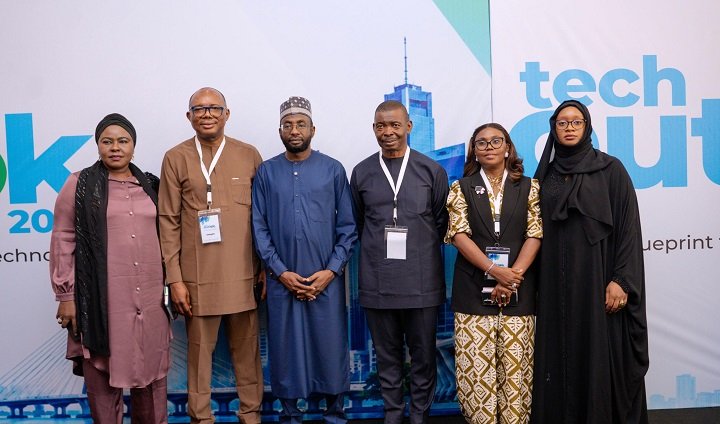
The National Information Technology Development Agency (NITDA) and the SATH Foundation are turning to research and data-driven insights to identify gaps in Nigeria’s technology ecosystem, attract investment and accelerate digital adoption across critical sectors of the economy.
The initiative, known as the Nigeria Tech Outlook, is designed to provide a comprehensive assessment of the country’s technology landscape and equip government, businesses, investors and innovators with evidence to guide decisions on digital transformation and economic development.
Speaking at the Tech Outlook event in Lagos, the Director-General of NITDA, Kashifu Inuwa Abdullahi, said Nigeria must move beyond celebrating individual technological achievements to building a stronger, globally competitive innovation ecosystem.
He noted that while Nigerian innovators and technology companies had recorded significant successes, sustaining and expanding those achievements would require reliable digital infrastructure, supportive policies, strategic investments and stronger collaboration among government, industry players, investors and innovators.
According to him, the Nigeria Tech Outlook would provide evidence-based insights into technology access, adoption and its contribution to productivity across the economy, helping stakeholders identify areas requiring urgent intervention.
The first edition of the report will focus on five critical sectors: financial services, telecommunications, commerce and trade, government services, and healthcare.
Illustrating the importance of data in identifying untapped opportunities, Inuwa disclosed that more than 80 per cent of over 2,000 Nigerians surveyed expressed willingness to use telemedicine services, while fewer than 20 per cent had ever used them.
He explained that the disparity between willingness and actual usage highlighted opportunities for investment and innovation while providing policymakers with insights into the barriers preventing wider technology adoption.
Such findings, he said, could help investors identify underserved markets, encourage technology entrepreneurs to develop solutions that address real needs and enable governments to formulate policies that expand access to digital services.
The report will also examine emerging technologies, including artificial intelligence and autonomous systems, as well as digital trust and governance, cybersecurity, data privacy, cloud computing and digital infrastructure.
These areas are expected to shape discussions on how Nigeria can strengthen its technological capabilities, improve productivity and expand the deployment of digital solutions across essential sectors.
Inuwa emphasised that technology policies and regulations must be informed by research and industry realities rather than assumptions. He called on industry leaders to contribute their expertise to reviewing the report’s findings and identifying practical interventions capable of stimulating investment, supporting innovation and driving economic growth.
The Nigeria Tech Outlook is expected to serve different stakeholders by providing governments with insights for evidence-based policymaking, businesses with a clearer understanding of technology adoption gaps, investors with information to guide investment decisions, and innovators with opportunities to develop solutions to pressing national challenges.
The first edition of the report is scheduled for launch at the Digital Nigeria International Conference, marking a significant step in efforts to strengthen Nigeria’s technology intelligence and create a more coordinated approach to digital development.
Speaking on the initiative, the founder and chairman of the SATH Foundation, Collins Onuegbu, said technology had become central to Nigeria’s economic and social development, transforming how people work, trade, communicate, learn and access public services.
He added that digital innovation was reshaping business operations, government engagement, security, productivity and national competitiveness, making a structured assessment of the country’s technology landscape increasingly important.
Onuegbu said conducting the assessment annually would create institutional memory, allowing stakeholders to track progress, evaluate existing priorities and build a stronger evidence base for decisions concerning Nigeria’s digital future.
He also emphasised the need for the gathering to go beyond speeches and produce meaningful engagement and actionable outcomes that would advance technology development, economic growth and national competitiveness.
Through their collaboration, NITDA and the SATH Foundation seek to establish the Nigeria Tech Outlook as a recurring source of technology intelligence to guide investment, strengthen policymaking and promote homegrown innovations.
The initiative is ultimately aimed at positioning Nigeria to translate its growing pool of technology talent and entrepreneurial capacity into a globally competitive innovation ecosystem driven by research, collaboration and solutions tailored to the country’s development needs.
