



Urges Sweeping Constitutional Reforms To Shield Police, INEC, EFCC, CBN, Others From Executive Control
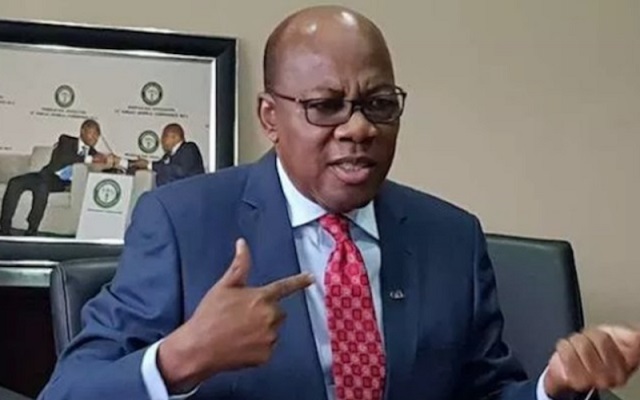
Senior Advocate of Nigeria (SAN) and former President of the Nigerian Bar Association (NBA), Dr. Olisa Agbakoba, has thrown his weight behind President Bola Ahmed Tinubu’s push for the creation of state police but issued a stark warning that the reform could become a dangerous instrument of political repression unless accompanied by far-reaching constitutional safeguards that insulate key institutions from executive control.
In a detailed Open Letter addressed to the Secretary to the Government of the Federation (SGF), Dr. George Akume, Agbakoba argued that while devolving policing powers is a major step toward strengthening internal security, handing state police to governors without constitutional checks would merely decentralise abuse of power rather than improve governance.
“If the proposed state police framework is built on this constitutional architecture of independence and accountability, it is a welcome and progressive development,” he wrote. “If not, if state police are simply handed to governors without these protections, they will inevitably become tools of oppression, and Nigeria will have traded one problem for a far worse one.”
His intervention comes amid intense national debate over the Federal Government’s Executive Bill before the National Assembly seeking to amend Section 214 of the 1999 Constitution to establish state police—one of the most significant constitutional reforms proposed in recent years.
Agbakoba commended President Tinubu for initiating the legislation, describing the proposal as “a welcome development” capable of enhancing security by bringing policing closer to local communities.
However, he argued that the debate should not stop with policing.
According to him, Nigeria now has a historic opportunity to embark on a broader restructuring of governmental responsibilities by transferring several administrative functions from the Federal Government to states and local governments.
“Having devolved policing, is it not time to consider further technical devolutions such as drivers’ licences, prisons, marriage registration, arbitration, trade regulation, registration of business names, and all other matters best suited for states and local governments, to relieve the federal government of responsibilities that can be more efficiently managed at the subnational level?” he asked.
Describing the current constitutional moment as one that could redefine Nigeria’s federal system, Agbakoba cautioned lawmakers against repeating what he called the mistakes that have weakened other state institutions.
He pointed to the experience of State Independent Electoral Commissions and local government administration, arguing that both had gradually become extensions of governors’ offices despite being established to function independently.
“Devolution without institutional protection is reform in name only,” he warned.
“History has shown that where institutions lack genuine constitutional protection, they inevitably become instruments of executive power rather than servants of the people and the Constitution.”
To prevent such an outcome, Agbakoba urged Nigeria to adopt constitutional mechanisms similar to those contained in Chapter 9 of the South African Constitution, which protects democratic oversight institutions from political interference.
According to him, South Africa’s constitutional model has successfully insulated institutions such as the Public Protector, the Human Rights Commission, the Electoral Commission and the Auditor-General through guarantees of security of tenure, financial autonomy and independence from executive control.
“The result is that in South Africa, neither the President nor any provincial governor can dictate to or manipulate these critical institutions,” he observed.
The senior advocate proposed that Nigeria should similarly remove several strategic institutions from direct executive influence by constitutionally guaranteeing their independence.
Among those he listed were the Nigeria Police Force, the Independent National Electoral Commission (INEC), the Economic and Financial Crimes Commission (EFCC), the Independent Corrupt Practices and Other Related Offences Commission (ICPC), the Central Bank of Nigeria (CBN), the National Judicial Council (NJC), the Office of the Attorney-General, the Office of the Accountant-General, the National Human Rights Commission and the Code of Conduct Bureau.
Rather than remaining executive agencies under Section 153 of the Constitution, he argued, these institutions should enjoy constitutional protection, secure tenure for their leadership, independent funding through direct charges on the Consolidated Revenue Fund, and accountability to the National Assembly or State Houses of Assembly instead of the President or governors.
Agbakoba anchored his proposal on the constitutional philosophy advanced by renowned constitutional scholar Ben Nwabueze.
“This process has been described by Professor Ben Nwabueze as the concept of limited government, which is the principle that executive power is not at large but is constrained by independent institutions guaranteed by the Constitution,” he stated.
As a practical framework, Agbakoba recommended a shared appointment and removal process for state police leadership, modelled after judicial appointments.
Under the proposal, the Police Service Commission would identify and recommend qualified candidates; the governor would appoint from that list, while the State House of Assembly would confirm the appointment. Removal would follow the same tripartite constitutional process to ensure that no single arm of government could arbitrarily install or dismiss the head of the police.
“This architecture of shared constitutional responsibility is the surest guarantee against executive capture and the politicisation of law enforcement,” he said.
The recommendations place Agbakoba squarely within the growing camp of constitutional reform advocates who argue that genuine federalism is not merely about devolving powers but also about building institutions capable of resisting political manipulation.
His intervention is expected to add fresh momentum to ongoing deliberations on constitutional amendment, particularly as lawmakers, legal experts, governors and civil society organisations continue to debate the future of policing, federalism and democratic accountability in Nigeria.
With the state police proposal now before the National Assembly, Agbakoba’s message is unmistakable: decentralising power without constitutional restraints risks replacing one form of centralised control with multiple centres of unchecked executive authority.