



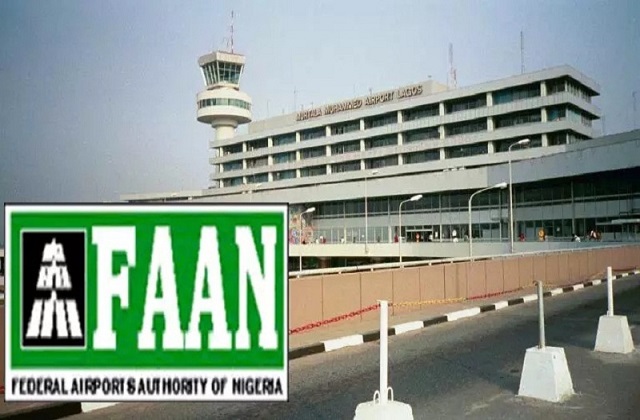
For decades, Nigeria’s aviation industry has been weighed down by outdated airport charges, rising operational costs, and the need for modern infrastructure that keeps pace with global aviation standards.
The Federal Airports Authority of Nigeria (FAAN), which manages 22 airports across the country, has long operated under financial constraints caused largely by tariffs and fees that have remained stagnant for years—even as inflation, security demands, and infrastructure pressure continue to rise.
Today, the conversation on the imperative of new FAAN airport charges is not merely a revenue argument. It is a national aviation safety, sustainability, and modernization argument. The reality is simple: Nigeria cannot build world-class airports on 2002 prices while running a 2026 aviation system.
Therefore, the decision by FAAN to embark on upward review of its airport charges is necessary, timely, and beneficial for the entire aviation ecosystem. Let’s take a look at some indices.
Two Decades of Stagnant Charges in a Dynamic Industry
Airport charges in Nigeria have remained largely unchanged for over 20 years. During that same period, the global aviation industry has transformed, fuel prices have skyrocketed, security requirements have intensified, and Inflation has eroded revenue value while maintenance and technology costs have doubled or tripled.
Yet FAAN’s charges—many of which were set in the early 2000s—have not been adjusted to reflect new realities. This means FAAN has been using outdated revenue structures to fund modern airport operations.
Rising Operational Costs and Regulatory Demands
Airports today are not just travel hubs—they are complex ecosystems requiring 24/7 power supply, modern security technologies, firefighting and emergency response readiness.
Other more expensive operational cost are runway, maintenance, airfield lighting, staff training and recurrent certification, environmental management (in line with ISO 14001 and ICAO standards) and customer service enhancements (in line with ISO 9001).
Each of these comes with rising costs. For example, ICAO now mandates advanced security screening technology, emergency response upgrades, and environmental impact controls. These obligations require heavy capital expenditure—investment FAAN cannot sustainably make without appropriate cost recovery.
The Infrastructure Gap: Why Nigeria Must Invest
Most Nigerian airports need upgrades in terminal facilities, runway and taxiway rehabilitation, boarding bridges, baggage handling systems, apron expansion, power and cooling systems, perimeter fencing and lightning arrestors. These improvements require billions of naira.
Without adjusting charges to reflect realistic cost-recovery models, FAAN cannot maintain critical infrastructure, improve airport safety, support airline growth, expand capacity for cargo and passenger traffic and also compete with regional airports like Accra, Kigali, Addis Ababa, and Johannesburg.
Safety and Security Cannot Be Negotiated
Aviation is safety-critical, and airports must meet global benchmarks. But safety has a price. New charges will enable FAAN to invest in cutting-edge firefighting vehicles (CFTs), modern scanners and surveillance systems, airfield lighting and navigational aids, training for aviation security personnel, environmental protection systems and emergency operations centres.
More importantly, enhanced revenue will help FAAN maintain a state of continuous audit readiness for ICAO, NCAA, and other regulatory assessments.
Enhancing Passenger Experience and Service Quality
Passengers demand clean terminals, functional restrooms, working conveyor belts, fast security checks, good lighting and ventilation, reliable Wi-Fi and better customer service. These improvements cost money. Modern airlines also demand world-class ground handling environments to ensure quick turnaround and operational efficiency. Revised charges give FAAN the financial muscle to meet these expectations.
Nigeria must Align With Global Best Practices
Most countries review airport charges every 3–5 years. Nigeria has not done so in more than 20 years. A review brings Nigeria closer to ICAO’s cost-recovery principles, International Civil Aviation Organization recommendations, Sustainable airport management models and Funding structures used by successful airport systems globally.
By adjusting charges, FAAN aligns Nigeria with models used in Europe, the Middle East, and Asia—where airports recover costs through transparent, regulated tariffs.
Supporting Aviation Growth and Economic Development
The aviation sector contributes massively to job creation, tourism, commerce, and national GDP. FAAN’s ability to upgrade airports is directly tied to attracting more international airlines, making Nigeria a West African aviation hub, supporting air cargo and e-commerce, boosting local tourism and improving regional connectivity among others. Without sufficient revenue, these opportunities remain underexploited.
The Way Forward: A Well-Communicated, Transparent Process
For the upward review to succeed, FAAN must continue to engage airlines, ground handlers, freight forwarders, aviation workers, passengers, the media and government stakeholders.
Transparent communication ensures stakeholders understand that revised charges are not punitive; they are necessary investments in safer, more modern airports.
Paying for the Airports Nigeria Deserves
Nigeria deserves airports that reflect its status, population, and economic potential. But world-class airports require sustainable financing. The current charges simply cannot support the infrastructure and safety requirements of modern aviation.
The imperative of new FAAN airport charges is therefore clear. They are to enhance safety, to modernize infrastructure, to improve service quality, to meet global standards and to make Nigerian airports competitive again.
Ultimately, the real winners are passengers, airlines, cargo operators, and the Nigerian economy.
