



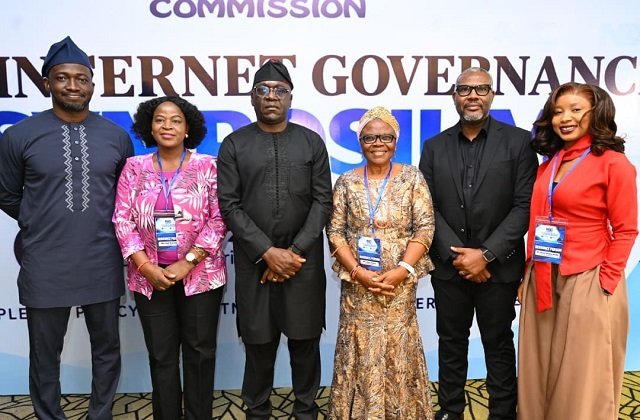
The Nigerian Communications Commission (NCC) has established an Internet Governance Working Group to strengthen collaboration among stakeholders and develop coordinated responses to emerging digital threats, including artificial intelligence-related risks, online fraud, privacy violations and the protection of vulnerable internet users.
The initiative is aimed at creating a sustained platform for dialogue and practical action to address challenges confronting Nigeria’s rapidly evolving digital environment.
The announcement was made on Thursday, October 15, 2026, at the inaugural NCC Internet Governance Symposium in Lagos, where the Commission called for greater cooperation among government institutions, industry players and other stakeholders to promote a safer, more secure and responsible internet.
Speaking at the event, the Executive Commissioner, Technical Services, Abraham Oshadami, who delivered the opening address on behalf of the Executive Vice Chairman and Chief Executive Officer, Dr Aminu Maida, said internet governance had implications far beyond technology and connectivity.
“They affect opportunity, trust, security and the rights of the people who use it,” he said, emphasising the need for Nigeria to participate actively in shaping internet governance policies and decisions.
Oshadami observed that the rapid advancement of artificial intelligence was transforming how Nigerians learn, work, communicate and access services, while simultaneously introducing new challenges relating to harmful online content, fraud, data privacy, accountability and child protection.
He noted that the growing complexity of these issues made collaboration across the communications industry and other sectors imperative, stressing that no single institution could effectively address the challenges in isolation.
According to him, sustained engagement among stakeholders would be essential to developing practical solutions that balance technological innovation with the need to protect internet users and uphold their rights.
The NCC Executive Commissioner also highlighted the Commission’s Internet Code of Practice (ICOP) 2026 as an important framework for promoting responsible online conduct and improving the safety of Nigeria’s digital space.
He explained that achieving the objectives of the code would require clearly defined responsibilities, meaningful stakeholder participation and consistent implementation.
Oshadami further drew attention to the Cyber Resilience Framework for the Nigeria Communication Sector (CRF-NCS), which is designed to strengthen the security and resilience of infrastructure underpinning digital communications and services.
He said the two initiatives reflected the need to build an online environment in which Nigerians could access digital services with greater confidence, supported by effective safeguards and resilient communications infrastructure.
The launch of the Internet Governance Working Group was a major highlight of the symposium, providing a formal mechanism for sustaining engagement beyond the inaugural event.
The group is expected to facilitate continuous dialogue, identify priority issues requiring intervention, and promote coordinated responses to challenges affecting Nigeria’s digital ecosystem.
Its establishment also signals the Commission’s intention to move internet governance discussions beyond periodic meetings towards sustained cooperation and more practical outcomes.
Oshadami urged participants to contribute openly and constructively to deliberations, encouraging them to use the symposium to clarify their respective responsibilities and build a common understanding of the actions required to address emerging internet governance concerns.
He expressed the Commission’s appreciation to stakeholders for their participation and formally declared the inaugural NCC Internet Governance Symposium 2026 open.
The Commission reiterated the importance of sustained cooperation among stakeholders in shaping a digital environment that supports innovation while safeguarding security, privacy, accountability and the interests of internet users across Nigeria.