



News Highlights:
- Nigeria is moving beyond purely technical defences to a “Total Resilience” model, prioritising people, digital literacy, and institutional processes.
- Through initiatives like the National Digital Literacy Programme and the 3MTT scheme, the country is building a comprehensive cybersecurity framework.
Nigeria is recalibrating its cybersecurity architecture in response to a rapidly evolving threat landscape driven by artificial intelligence, with a decisive shift away from technology-centric defences toward a broader, people-powered model of resilience.
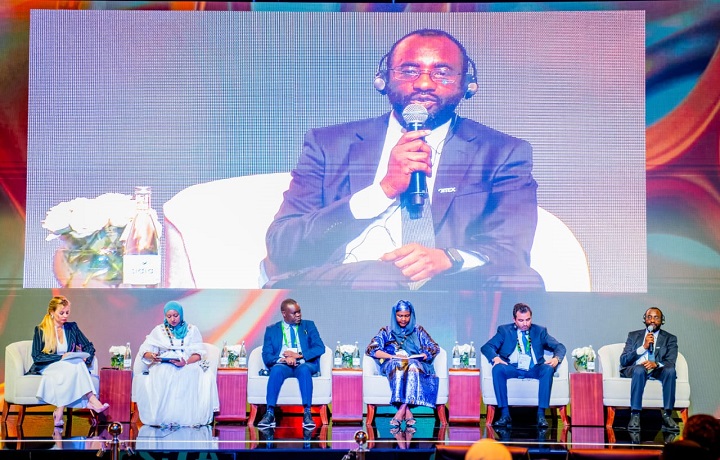
At the 2026 GITEX Africa summit, Director-General of the National Information Technology Development Agency (NITDA), Kashifu Inuwa, made a compelling case for what he described as “Total Resilience”—a holistic approach that integrates human capacity, institutional processes, regulatory frameworks, and technological infrastructure.
Speaking during a panel session on Cyber Resilience, Inuwa described the current global digital environment as being at a “critical turning point.”
He warned that emerging technologies are not only transforming industries and economies but are also reshaping the nature of cyber threats, demanding a proactive and multi-dimensional response from governments, institutions, and citizens alike.
“Cybersecurity is no longer just a technical issue. It is a strategic imperative for national development,” Inuwa stated. “We must think beyond technology alone and build resilience through people, processes, regulations, and infrastructure.”
Central to this shift is a renewed emphasis on the human factor in cybersecurity, as Inuwa revealed that Nigeria’s cyber strategy is shifting from high-end software systems to the individuals who interact with them daily.
Citing data that 95 per cent of all digital breaches stem from human error, he stressed that even the most advanced systems remain vulnerable if users are not adequately equipped.
“The most sophisticated technology cannot protect us if the human element is overlooked,” he noted.
To address this gap, the Federal Government has rolled out a comprehensive National Digital Literacy Programme to achieve 95 per cent digital literacy by 2030, with an interim target of 70 per cent by 2027.
The initiative prioritises cybersecurity awareness and digital safety, equipping citizens with the skills required to operate securely in an increasingly digitised society.
Complementing this is the “3 Million Tech Talent” programme, designed to build capacity across critical areas such as cybersecurity, artificial intelligence, and data science.
Through hackathons, innovation challenges, and mentorship initiatives, the programme seeks to redirect youthful talent toward productive and globally competitive ventures.
“We want to create an environment where young Nigerians are innovators, not just consumers of technology,” Inuwa said, underscoring the economic dimension of the strategy.
Responding to concerns about Nigeria’s position in global cybercrime rankings, Inuwa called for a more nuanced interpretation of the data.
“Countries with the most advanced digital economies also rank high in cybercrime because of the scale of their online activity,” he explained. “Our focus is on redirecting talent towards innovation and solutions that protect our citizens while contributing to global digital advancement.”
On the regulatory front, Nigeria continues to review and strengthen the Cybercrime Act of 2015 to ensure alignment with emerging threats. The legislation supports a coordinated National Cybersecurity Architecture under the supervision of the Office of the National Security Adviser.
Operationally, the country maintains a 24-hour cybersecurity operations centre responsible for real-time threat monitoring, advisories, and incident response.
Leveraging tools such as dark web surveillance and AI-enabled detection systems, the centre enhances situational awareness and accelerates response capabilities across sectors.
Inuwa emphasised that no single entity can secure the digital ecosystem alone, noting that NITDA is actively collaborating with ministries, departments, agencies, and private sector players to safeguard critical infrastructure and reinforce national cyber resilience.
“Cyber resilience is not a solo effort; it is a collective responsibility. By integrating people, technology, and regulation, we can build a secure, globally competitive digital economy,” he added.
As Nigeria advances deeper into a digital-first future, its evolving cybersecurity posture reflects a strategic recognition: in an era defined by AI-driven threats, resilience will depend not just on the strength of systems, but on the preparedness of people and the coherence of policies that bind them.
