



News Highlights:
- NITDA reaffirmed its commitment to building an inclusive digital economy, targeting 70% digital literacy by 2027 through its SRAP 2.0 agenda.
- The visiting delegation praised Nigeria’s Startup Act implementation and sought technical insights to support Angola’s emerging startup ecosystem framework.
Positioning itself at the centre of Nigeria’s fast-growing digital economy, the National Information Technology Development Agency (NITDA) has reiterated its commitment to fostering a more coordinated, inclusive, and innovation-driven technology ecosystem across the country.
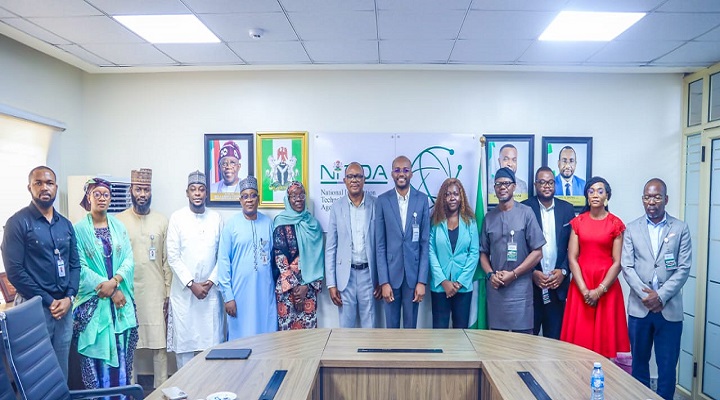
The agency reaffirmed this position during a working visit focused on Nigeria’s startup ecosystem framework, where the Director General of NITDA, Kashifu Inuwa, was represented by the Director of Stakeholders Management and Partnerships, Dr Aristotle Onumo.
Speaking during the engagement, the DG noted that NITDA was established to champion coordinated and sustainable information technology development in Nigeria through a blend of regulatory oversight and developmental initiatives.
He explained that the agency continues to play the role of an ecosystem orchestrator by driving collaboration, encouraging innovation, and enabling growth across Nigeria’s expanding digital economy.
He stated that these reforms are aligned with the Federal Government’s Eight-Point Agenda and reflected in NITDA’s Strategic Roadmap and Action Plan (SRAP 2.0), which is built around eight strategic pillars designed to accelerate the growth of Nigeria’s digital economy.
According to him, a key objective of the roadmap is to position Nigeria as a technologically driven nation that promotes inclusive economic development through innovation.
He highlighted digital literacy as a major priority, with NITDA targeting 70 per cent digital literacy by 2027 under the National Digital Literacy Framework, with a long-term goal of achieving 95 per cent by 2030.
Other priority areas, he said, include ecosystem development, IT talent advancement, expansion of digital infrastructure, policy implementation, and research-driven innovation.
The visiting delegation from Angola’s National Institute of Support for Micro, Small and Medium Enterprises (INAPEM), led by Chairman of the Board of Directors (PCA) and Chief Executive Officer, Bráulio Augusto, commended Nigeria’s progress in implementing the Nigeria Startup Act and described the country as a valuable model for shaping Angola’s own startup legislation.
Augusto disclosed that Angola’s Startup Law has received initial parliamentary approval and is now entering the implementation stage.
He expressed interest in understanding how Nigeria transitioned from legal adoption to practical execution, particularly in areas such as startup labelling, incentive management, ecosystem mapping, investor registration, and the operation of the Nigeria Startup Portal.
According to him, Angola is currently developing the Startup Angola Programme under its Digital Entrepreneurship Support Programme, aimed at building a structured and integrated startup ecosystem rather than isolated interventions.
The programme will focus on institutional strengthening, startup funding, support for business development service providers, expansion of innovation hubs, and partnerships with international accelerators.
He added that Nigeria’s experience is especially relevant as Angola seeks solutions to challenges, including informality, limited access to finance, youth unemployment, digital inclusion gaps, and restricted market access for small and medium-sized enterprises.
The INAPEM chief also requested further technical insights into Nigeria’s National Startup Council, its member selection process, and the governance structure of the Nigeria Startup Portal.
The visit highlights growing collaboration among African nations in digital policy development and further reinforces Nigeria’s position as a reference point in shaping startup ecosystem frameworks across the continent.
