


Digital Times Nigeria
  • Home
  • Telecoms
    • Broadband
  • Business
    • Banking
    • Finance
  • Editorial
    • Opinion
    • Big Story
  • TechExtra
    • Fintech
    • Innovation
  • Interview
  • Media
    • Social
    • Broadcasting
Facebook X (Twitter) Instagram
Trending
  • NDPC Wins Landmark Court Case Affirming Powers To Register PoS Agents
  • FAAN Commissions Upgraded Domestic Terminal At MAKIA Kano
  • Pre-Order Now Available On Konga As Samsung Unveils New Galaxy Z Fold8 Series
  • NCC, REA Seal Deal To Drive Digital Infrastructure Expansion Through Renewable Energy
  • Telcos Invested ₦2.13trn In 2025, Plan ₦1.86trn Network Expansion Investment In 2026- Adebayo
  • 66 Years On: Governor Soludo And The Quiet Digital Revolution Taking Root In Anambra
  • Creating Financial Happiness: How Moniepoint Is Powering Nigeria’s Inclusive Economic Transformation
  • Nkata Ndi Iyom, Leo Stan Ekeh Foundations Train Community Leaders To Drive Youth Character Reforms
Facebook X (Twitter) Instagram
Digital Times NigeriaDigital Times Nigeria
  • Home
  • Telecoms
    • Broadband
  • Business
    • Banking
    • Finance
  • Editorial
    • Opinion
    • Big Story
  • TechExtra
    • Fintech
    • Innovation
  • Interview
  • Media
    • Social
    • Broadcasting
Digital Times Nigeria
Home » REPORT: World E-Waste Rises By 8 Per Cent
HOME

REPORT: World E-Waste Rises By 8 Per Cent

DigitalTimesNGBy DigitalTimesNG19 May 2020No Comments3 Mins Read11 Views
Facebook Twitter Pinterest Telegram LinkedIn Tumblr WhatsApp Email
E WASTE
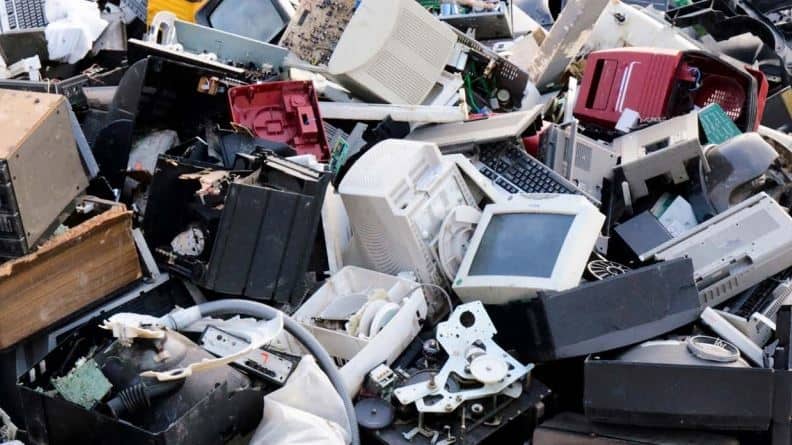
E-Waste products....Photo credit: ITU News
Share
Facebook Twitter LinkedIn Pinterest Telegram Email WhatsApp

A new report on global e-waste (discarded products with a battery or plug) shows a staggering 44.7 million metric tonnes (Mt) generated in 2016 – up 3.3 Mt or 8% from 2014.   

In 2016, the world generated e-waste – everything from end-of-life refrigerators and television sets to solar panels, mobile phones, and computers – equal in weight to almost nine Great Pyramids of Giza, 4,500 Eiffel Towers, or 1.23 million fully loaded 18-wheel 40-ton trucks, enough to form a line from New York to Bangkok and back.

Experts foresee a further 17% increase – to 52.2 million metric tonnes of e-waste by 2021, – the fastest-growing part of the world’s domestic waste stream. 

The Global E-waste Monitor 2017, launched Monday, is a collaborative effort of the United Nations University (UNU), represented through its Sustainable Cycles (SCYCLE) Programme hosted by UNU’s Vice-Rectorate in Europe, the International Telecommunication Union (ITU), and the International Solid Waste Association (ISWA). 

Only 20% of 2016’s e-waste is documented to have been collected and recycled despite rich deposits of gold, silver, copper, platinum, palladium, and other high-value recoverable materials. 

The conservatively estimated value of recoverable materials in last year’s e-waste was the US $55 billion, which is more than the 2016 Gross Domestic Product of most countries in the world.   

About 4% of 2016’s e-waste is known to have been thrown into landfills; 76% or 34.1 Mt likely ended up incinerated, in landfills, recycled in informal (backyard) operations, or remain stored in our households. 

On a per-capita basis, the report shows a rising trend as well. 

READ ALSO  Trinity Audio Delta Review: Fighting the Hybrid Fight

Falling prices now make electronic and electrical devices affordable for most people worldwide while encouraging early equipment replacement or new acquisitions in wealthier countries.   

As a result, the average worldwide per capita e-waste generated was 6.1 kilograms in 2016, up 5% from 5.8 kg in 2014.  

The highest per capita e-waste generators (at 17.3 kilograms per inhabitant) were Australia, New Zealand, and the other the nations of Oceania, with only 6% formally collected and recycled.  

Europe (including Russia) is the second-largest generator of e-waste per inhabitant with an average of 16.6 kg per inhabitant. However, Europe has the highest collection rate (35%).  

The Americas generate 11.6 kg per inhabitant and collects only 17%, comparable to the collection rate in Asia (15%). However, at 4.2 kg per inhabitant, Asia generates only about one-third of America’s e-waste per capita.  

Africa, meanwhile, generates 1.9 kg per inhabitant, with little information available on its collection rate.

8% E-Waste World
Share. Facebook Twitter Pinterest LinkedIn Tumblr Email
Previous ArticleCOVID-19 5G Link Claims: Chris Oyakhilome’s TV Station Sanctioned In UK
Next Article Science & Tech Ministry, NIPPS Partner On Review Of Science, Technology Reports
DigitalTimesNG
  • X (Twitter)

Comments are closed.

Categories
About
About

Digital Times Nigeria (www.digitaltimesng.com) is an online technology publication of Digital Times Media Services.

Facebook X (Twitter) Instagram
Latest Posts

NDPC Wins Landmark Court Case Affirming Powers To Register PoS Agents

29 July 2026

FAAN Commissions Upgraded Domestic Terminal At MAKIA Kano

29 July 2026

Pre-Order Now Available On Konga As Samsung Unveils New Galaxy Z Fold8 Series

29 July 2026
Popular Posts

Building Explainable AI (XAI) Dashboards For Non-Technical Stakeholders

2 May 2022

Building Ethical AI Starts With People: How Gabriel Ayodele Is Engineering Trust Through Mentorship

8 January 2024

Gabriel Tosin Ayodele: Leading AI-Powered Innovation In Web3

8 November 2022
© 2026 Digital Times NG.
  • Advert Rate
  • Terms of Use
  • Advertisement
  • Private Policy
  • Contact Us

Type above and press Enter to search. Press Esc to cancel.