



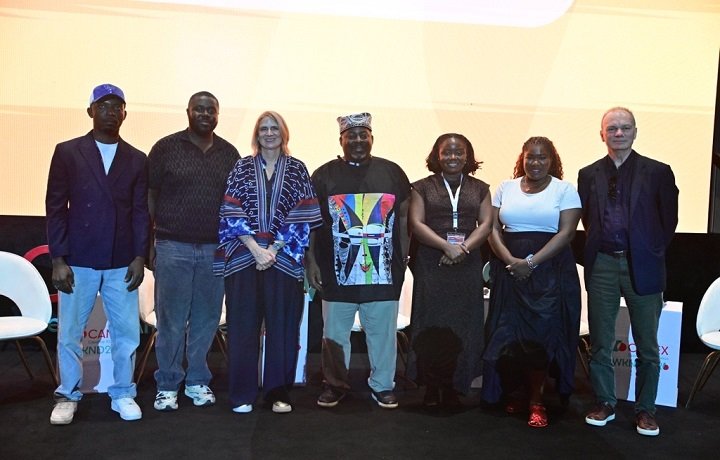
The United Kingdom and Nigeria are stepping up efforts to translate their growing cultural relationship into tangible commercial opportunities, with a series of engagements in Lagos bringing creative professionals, businesses, policymakers and cultural institutions together to explore partnerships, expand market access and strengthen the creative economy.
The engagements, organised under the UK Creative Sector Delegation, brought together 17 professionals from England, Scotland, Wales and Northern Ireland to interact with Nigerian counterparts across film, television, music, fashion, design, literature, theatre, visual arts and other creative industries.
The initiative provided a platform for knowledge exchange, professional networking and discussions on practical ways to unlock the commercial potential of both countries’ creative sectors.
Through targeted meetings, roundtables and activities held alongside the Africa International Film Festival, Creative Africa Nexus Weekend, Lagos Fringe and Art X Lagos, participants explored opportunities for collaboration, business development and access to new audiences and markets.
Key areas of discussion included skills development, intellectual property protection and rights management, access to appropriate finance, production capacity, commissioning, distribution and strategies for reaching local and international audiences.
The engagements also advanced the work of the UK-Nigeria Enhanced Trade and Investment Partnership Creative Industries Technical Working Group, established in March 2025 to strengthen commercial cooperation between both countries.
The Working Group brings together government and industry representatives to identify business opportunities, tackle regulatory and non-tariff barriers and promote partnerships across film and television, music, design and fashion, architecture, advertising and gaming.
British Deputy High Commissioner in Lagos, Jonny Baxter, said the UK was committed to building a practical and enduring partnership with Nigeria by connecting creative businesses and institutions with the expertise, networks, finance and international markets required to grow.
“Nigeria’s creative industries combine exceptional talent, entrepreneurial energy and global influence. The UK is committed to being a practical, long-term partner, connecting Nigerian creative businesses and institutions with expertise, networks, finance and international markets.
“These engagements have been about creating the conditions for meaningful collaboration. Their success will be measured by what happens next: the relationships that continue, the barriers that are addressed and the opportunities that develop into lasting benefits for people and businesses in both our countries.”
The programme is also part of preparations for the UK-Nigeria Season of Culture in 2028, which is expected to build on the relationships, professional exchanges and creative partnerships emerging from the current engagements.
The planned cultural season will provide further opportunities for co-creation, audience development, professional exchanges and commercially driven collaborations between creative practitioners and institutions in both countries.
Country Director of the British Council in Nigeria, Donna McGowan, said sustained cultural exchange was essential to building meaningful international partnerships and creating lasting value for creative professionals.
“Creativity thrives when talented people have the opportunity to exchange ideas, develop their skills and build trusted relationships across borders. This delegation has connected creative practitioners and institutions from Nigeria and the United Kingdom, creating space for them to learn from one another and explore areas of shared interest.
“For the British Council, the priority is to ensure that cultural exchange creates lasting value. The relationships and insights developed through this programme can support future collaboration, widen access to international networks and help shape an inclusive and ambitious UK-Nigeria Season of Culture in 2028.”
Following the engagements, UK and Nigerian partners are expected to sustain the momentum through priority introductions, policy discussions and partnership opportunities identified during the programme.
The collaboration reflects the broader commitment of both countries to position creativity as a catalyst for cultural connection, innovation, employment generation, exports and shared economic prosperity.
Director-General of the National Council for Arts and Culture (NCAC), Obi Asika, said Nigeria must look beyond the recognition of its creative talent and focus on converting its intellectual property and cultural assets into sustainable commercial ventures.
“Nigeria has an extraordinary depth of creative talent and intellectual property, much of which is still waiting to reach its full commercial potential. The opportunity before us is to use the Enhanced Trade and Investment Partnership and the Season of Culture to help bring more of that creativity to audiences and markets.
“For me, the real measure of success will be what lasts beyond 2028: the tours, collaborations, publishing deals, television projects, fashion partnerships, and new businesses that grow from the relationships we are building now. We want to be able to look back and point to tangible projects and say, ‘that came to life through the UK-Nigeria Season of Culture 2028.”
Also reflecting on the engagements, UK delegate and Founder and Chief Executive Officer of the Black British Book Festival, Selina Brown, described Lagos as an inspiring creative destination, highlighting the opportunities for mutual learning and collaboration between the two countries.
“Lagos has been absolutely incredible. The freedom, creativity, and energy I’ve experienced here are unlike anything I’ve encountered anywhere else in the world. In just one week, I’ve met emerging and established artists, writers, publishers and leaders across the creative industries, and I’m leaving deeply inspired.
“Nigeria’s creative sector feels full of possibility, and I already know I have to come back. There is so much the UK and Nigeria can learn from one another, and that exchange should be genuinely mutual, rooted in collaboration rather than the idea that knowledge only flows in one direction.”
