



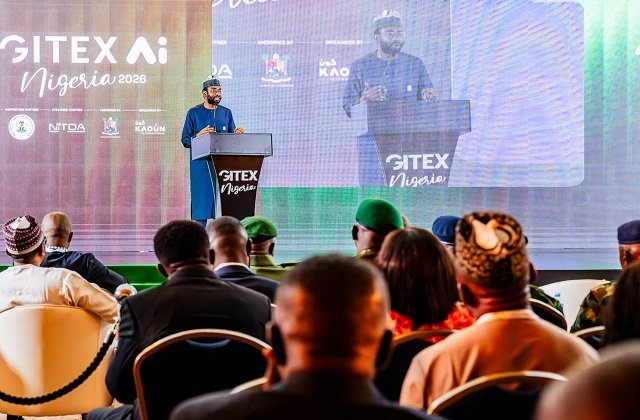
Nigeria’s ambition to move from a consumer of imported technology to a producer of indigenous digital solutions and sovereign artificial intelligence has taken centre stage as the second edition of GITEX NIGERIA opened in Abuja on Monday.
The high-profile inauguration brought together senior government officials, international technology executives, investors and digital economy stakeholders, setting the tone for a four-day programme focused on artificial intelligence, digital infrastructure, innovation and technology-led economic transformation.
Held under the patronage of President Bola Ahmed Tinubu, GITEX NIGERIA is taking place in Abuja and Lagos from August 31 to September 3, 2026.
The event is supported by the Federal Ministry of Communications, Innovation and Digital Economy in collaboration with the National Information Technology Development Agency (NITDA), endorsed by the Lagos State Government and organised by KAOUN International, the global organiser of GITEX events.
At the centre of Monday’s opening was the Abuja Government Leadership & AI Summit, which challenged policymakers and industry leaders to rethink Africa’s position in the global technology value chain and accelerate the development of locally owned infrastructure, talent and AI capabilities.
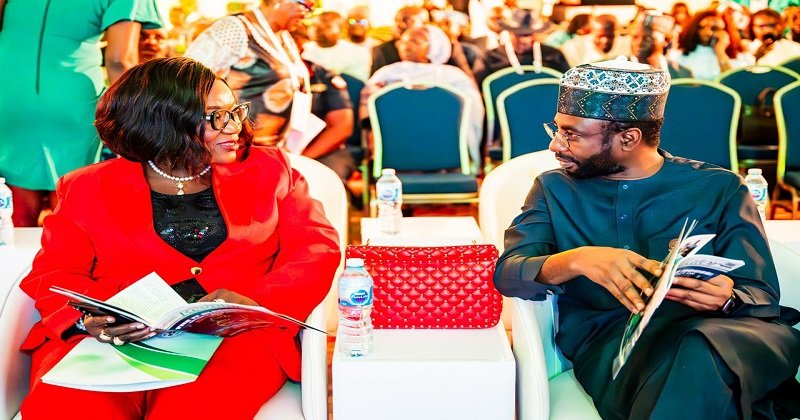
Speaking at the inauguration, NITDA Director General, Kashifu Inuwa Abdullahi, said Nigeria was laying the foundations required to achieve digital sovereignty while using technology to drive economic growth.
“Achieving true digital sovereignty means owning the capabilities, infrastructure, and intelligence that power our future. Through strategic initiatives like DL4ALL, 3MTT and Project BRIDGE, we are rapidly scaling our technical talent pool and extending high-speed digital inclusion across every local government area.
“We are building the policy, cloud infrastructure, and regulatory frameworks necessary to host our data locally, deploy AI responsibly, and enhance overall national productivity. GITEX NIGERIA positions our country as a global force shaping the international tech ecosystem, not just participating in it.”
The discussions also highlighted the growing role of subnational governments in turning Nigeria’s digital transformation agenda into commercially viable opportunities.
Lagos State, in particular, was presented as a potential hub for the next wave of investment in computing infrastructure, data centres, digital public services and enterprise technology.
Lagos State Governor, Babajide Sanwo-Olu, said the investment opportunity extending beyond Nigeria’s traditional fintech narrative was increasingly evident in computing infrastructure and government technology.
“Most international capital looks at Nigeria and sees consumer fintech. That was the last decade’s trade. Here is what I believe is being under-priced today. First, compute. Lagos is one of the most cable-landed cities on the African continent. We have world-class subsea capacity arriving on our shores, and comparatively little of the compute that should sit behind it. Africa’s AI workloads are currently being processed in Europe.
“That is a latency problem, a cost problem, a data sovereignty problem, and therefore an investment opportunity. With our electricity law, our fibre programme and our data centre campuses, Lagos is the natural place to fix it.
“Second, the government markets itself. Lagos operates a budget larger than that of several West African countries. As we digitise procurement, revenue, permitting, health records, transport and land administration, we are creating a serious, recurring, creditworthy enterprise software market – one that most global technology firms have not yet properly bid for.”
From technology consumption to indigenous production
The case for a stronger Nigerian technology ecosystem was further reinforced by the Secretary to the Government of the Federation, Senator Dr George Akume, who linked digital sovereignty to the Federal Government’s broader ambition of building a $1 trillion economy.
“Under the vision of His Excellency President Bola Ahmed Tinubu and the Renewed Hope Agenda, Nigeria is boldly driving toward a $1 trillion economy. To achieve economic transformation, we must now move far beyond basic connectivity to build true indigenous innovation and digital sovereignty. GITEX NIGERIA provides the strategic platform where government vision aligns with private sector execution.
“This is our opportunity for a decisive transition from being mere consumers of foreign technology to becoming global producers of talent, sovereign infrastructure, and inclusively designed AI – built by Nigeria, for Nigeria. We are leading a new era for Africa.”
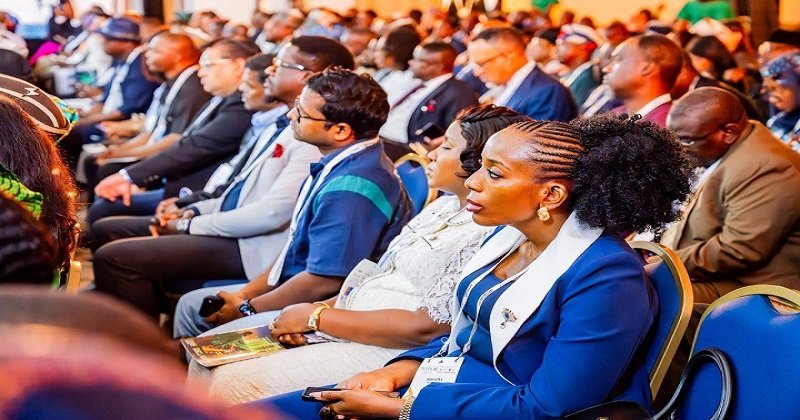
The Abuja summit, held under the theme ‘Beyond Connectivity – The Bridge to Sovereign AI & Innovation’, brought more than 500 public- and private-sector leaders and investors from Africa and beyond into discussions around the infrastructure and policy architecture required to support the continent’s next phase of digital development.
More than 25 international experts participated in sessions examining digital public infrastructure, artificial intelligence, cybersecurity, data sovereignty, connectivity, investment and strategic partnerships.
The discussions focused on how African countries can convert increasing digital adoption into sustainable economic value by developing trusted infrastructure, strengthening local capabilities and creating conditions for scalable innovation.
Sessions including ‘Backbone Infrastructure & Last-Mile Connectivity: Cables, Satellites & Blended Finance’ examined the role of cables, towers, satellites, edge infrastructure and innovative financing in closing Africa’s connectivity gap.
Another session, ‘Getting Private Capital to Move into Digital Infrastructure’, focused on the risk, governance and deal-structuring challenges that continue to limit commercial investment in digital infrastructure across West Africa and the wider continent.
Meanwhile, ‘An African Opportunity: The Turning Point of eGov & Digital Interoperability’ explored the rapidly expanding digital government market, including opportunities arising from digital identity, payments and data-exchange infrastructure.
Lagos takes centre stage as startups court global capital
The focus shifts to Lagos from September 2–3, where GITEX NIGERIA’s Tech Expo will run alongside the Future Economy Conference and FDX by GITEX.
The Lagos programme is expected to provide Nigerian and African startups with access to international investors, technology partners and potential customers as they seek to scale beyond their domestic markets.
More than 200 investors from 30 countries, collectively managing about US$200 billion in assets, are expected to participate. Among the international funds joining the programme are France’s Askya Investment Partners, Belgium’s Incofin Investment, Kenya- and Netherlands-based Triple Jump, UK-based Lightrock, UAE-based Global Ventures and US-based Innovest Afrika.
The organisers are also pointing to the inaugural 2025 edition as evidence that connections made at GITEX NIGERIA can translate into tangible investment outcomes.
At last year’s event, venture studio FirstFounders connected with 18 startups, including LabTracka, Vant and GraceAI, leading to deeper engagement with the companies.
Vant, an AI-powered business banking and management platform, subsequently joined the FirstFounders portfolio following a US$200,000 investment, alongside operational support.
The development underscores the broader proposition behind GITEX NIGERIA: that beyond exhibitions and conferences, the event can serve as a bridge linking African founders to global capital, partnerships and markets.
With Abuja setting the policy and sovereignty agenda and Lagos providing the platform for startups, investors and technology companies, the 2026 edition is positioning Nigeria at the heart of the conversation over Africa’s next digital economy, and its capacity to build, own and export the technologies that will shape it.