



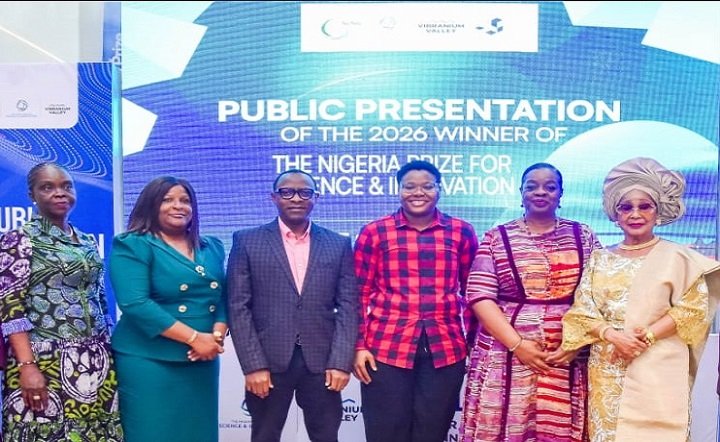
Mary-Brenda Akoda, winner of the 2026 Nigeria Prize for Science and Innovation (NPSI), has unveiled GenScanAI, an artificial intelligence-powered medical imaging solution designed to reduce magnetic resonance imaging (MRI) scan times by up to 90 per cent, improve image quality and enhance healthcare delivery without requiring additional MRI hardware.
Akoda presented the innovation at Vibranium Valley, Ikeja, Lagos, where medical practitioners, healthcare professionals, researchers, academics, students and technology stakeholders examined its scientific foundations, potential clinical applications and capacity to address challenges in medical imaging and diagnostic services.
GenScanAI uses artificial intelligence and advanced computing techniques to reconstruct MRI images, with the potential to significantly shorten scan times while maintaining or improving image quality.
The technology could enable hospitals and diagnostic centres to examine more patients using existing MRI infrastructure, optimise equipment utilisation, reduce waiting periods and support faster diagnosis and treatment.
During the presentation, Akoda explained the healthcare challenges that inspired the innovation, the technology underpinning its development and its potential applications. The engagement also allowed medical practitioners and researchers to explore its practical relevance, while students gained insights into how scientific research and technological innovation can provide solutions to real-world problems.
Speaking at the event, Sophia Horsfall, NLNG’s General Manager, External Relations and Sustainable Development, described GenScanAI as a response to an important healthcare need, particularly as population growth places increasing pressure on diagnostic services.
“Medical imaging plays a critical role in diagnosis and treatment, but the time required for MRI examinations can create delays for patients and limit the number of people healthcare facilities can serve. Innovations such as GenScanAI demonstrate how advances in artificial intelligence and computing can be applied to address practical healthcare challenges and improve the efficiency of existing medical infrastructure,” Horsfall said.
She said the public presentation offered an opportunity to take the innovation beyond the Prize adjudication process and promote engagement with the medical and research communities.
“This presentation allows healthcare professionals, researchers and students to engage directly with Mary-Brenda’s work, understand its potential and consider how it could contribute to healthcare delivery.
“The Nigeria Prize for Science and Innovation recognises scientific excellence and encourages solutions to national challenges. Creating opportunities for wider engagement with winning innovations is an important part of bringing their potential benefits to public attention,” she said.
The innovation’s potential to cut MRI acquisition time by up to 90 per cent could be particularly significant for hospitals and diagnostic centres handling large numbers of patients. Shorter examinations could increase patient throughput and ease waiting times without the immediate expense of acquiring additional MRI machines.
GenScanAI’s reported potential to accommodate patient movement and improve image quality could further enhance imaging outcomes. However, its clinical effectiveness and suitability for routine medical use would depend on appropriate clinical evaluation and validation.
Akoda emerged as the winner of the 2026 edition of The Nigeria Prize for Science and Innovation after a rigorous evaluation of more than 230 entries.
The competition focused on “Innovations in Artificial Intelligence or ICT or Digital Technologies for Development”, underscoring the growing importance of digital technologies in addressing societal challenges and supporting national development.
NLNG facilitated the public presentation to give the award-winning innovation wider visibility among relevant stakeholders and stimulate discussions on its potential applications.
The engagement at Vibranium Valley highlighted the importance of connecting scientific research with healthcare professionals, research institutions, and other stakeholders who could help translate promising innovations into practical benefits for patients and the wider healthcare system