



News Highlights:
- NiRA President, Adesola Akinsanya, emphasised that journalists must go beyond routine reporting to actively shape national discourse, framing .ng adoption as central to Nigeria’s digital identity, trust, and global positioning.
- The association warned that reliance on foreign domains fuels economic leakage, weakens security, and undermines Nigeria’s control over its digital ecosystem, urging a strategic shift toward local domain adoption.
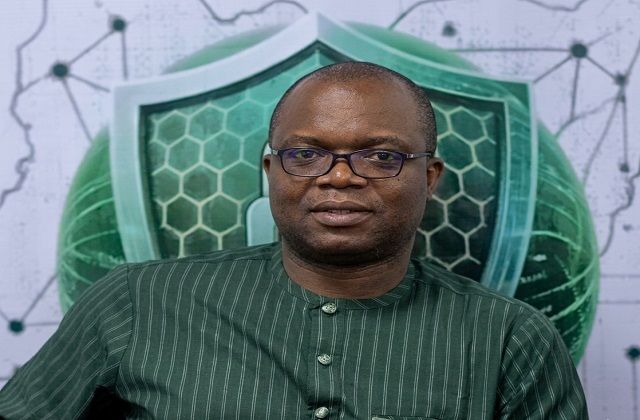
The President of the Nigeria Internet Registration Association (NiRA), Adesola Akinsanya, has called on Nigerian media professionals to take a frontline role in promoting the adoption of the country’s indigenous domain, .ng, describing it as a critical component of national digital sovereignty and economic growth, Digital TimesNG reports.
Speaking at the .ng Media Advocacy and Capacity Building Initiative held on Thursday, at the NiRA Secretariat, Akinsanya said Nigeria’s rapidly expanding digital economy must be underpinned by stronger control of its foundational internet infrastructure, particularly the domain name system.
According to him, while Nigeria is actively participating in the global digital ecosystem, it has yet to fully assert control over key structural layers that define its online identity, noting that the .ng domain, Nigeria’s unique stake in the global domain name system coordinated by the Internet Corporation for Assigned Names and Numbers, should be seen as more than a technical tool.
“The .ng domain should not be viewed merely as a technical or administrative tool; it is, in fact, a piece of national digital infrastructure,” he said. “If data is the new oil and platforms are distribution channels, then domain names represent the digital real estate upon which value is created and sustained.”
Akinsanya expressed concern that many Nigerian businesses, institutions, and even public-facing organisations continue to rely on foreign domains such as .com and .org, a trend he said weakens Nigeria’s digital identity and exposes the ecosystem to multiple risks.
He warned that this dependence contributes to a growing trust deficit, economic leakage, and security vulnerabilities. “In an era where users are increasingly concerned about authenticity and security, locally identifiable domains provide a level of assurance that foreign domains often cannot,” he said, adding that reliance on foreign-controlled platforms also complicates jurisdiction and incident response.
Beyond infrastructure and policy, the NiRA president emphasised the strategic role of the media in shaping public perception and national priorities around digital issues, and urged journalists to go beyond routine reporting and instead frame conversations around digital sovereignty and national interest.
“If the significance of .ng is not consistently highlighted, it will remain underutilised,” he noted. “However, when properly contextualised and communicated, it becomes more than a domain — it becomes a symbol of trust, a tool for economic positioning, and a marker of national alignment.”
Akinsanya, who challenged prevailing attitudes toward domain name selection, describing it as a strategic decision rather than a routine technical afterthought, also stressed that domain choices sit at the intersection of identity, security, and economic relevance and must be treated with corresponding importance.
The media advocacy initiative, he explained, was designed to bridge the gap between technical complexity and public understanding of internet governance, domain name systems, and cybersecurity, adding that equipping journalists with the right knowledge would enhance accurate and impactful reporting on issues central to Nigeria’s digital future.
Looking ahead, Akinsanya identified infrastructure, adoption, and narrative as the three pillars that will determine Nigeria’s competitiveness in the global digital economy. While NiRA continues to strengthen infrastructure and drive adoption of the .ng domain, he said, shaping the narrative would require sustained collaboration with the media.
“Every headline, every feature, and every analysis contributes to defining how Nigeria is perceived in the digital space,” he said.
While urging media professionals to recognise their influence in shaping the country’s digital trajectory, Akinsanya stated: “You are not merely observers of Nigeria’s digital transformation; you are active participants in shaping its trajectory. The story of Nigeria’s internet is still being written.”